Showing posts with label Science-Earth. Show all posts

Sunday, February 1, 2015

Violence recipe: Youth in groups with nothing to do but make trouble


 Carol Forsloff - Kids that
hang out with nothing to do in groups, even if the kids are generally
good kids, is still a recipe for violence according to researchers at
Ohio University.  The advice your parents gave you might be good news after all.


In fact researchers maintain it is a good idea to be careful about letting teens
gather with nothing to do and with no adult supervision.


“Even if you trust all your neighbors and all the teens are 'A' students, it is best to assume that groups of teens just hanging out can lead to problems, including violence,” said Christopher Browning, co-author of the study and associate professor of sociology at Ohio State University.

A long-term study of Chicago neighborhoods looked at informal teen gatherings and found these significantly increased the opportunities for violence by some of the adolescents.

Levels of violence did differ according to neighborhoods, but in general those communities with groups of unsupervised teens had higher levels of violence, even in "good" neighborhoods.

Other research has shown that this type of unsupervised interaction in groups
of teens can also lead to general delinquency patterns.  This study,
however, found that violence is part of that problem.


“The findings tap into the debate about how much structure is appropriate for kids today,” Browning said.

Browning conducted the study with David Maimon, a former Ohio State graduate student now at the University of Maryland.  The results appear in the current issue of the journal Criminology.

The study utilized information from the Project on Human Development in Chicago Neighborhoods Community Survey
and Longitudinal Cohort Study.  The research examined 80 different
Chicago neighborhoods to see how these neighborhoods impacted the
behavior of teenagers.  Interviews took place during an eight year
period, from 1994 - 2002 and involved 842 young people between the ages
of 8 and 13.


Researchers found that in neighborhoods where young people were trusted to be on their own and just hang out with groups of friends had more levels of violence.“Parents are better off assuming that more structure is better for their teens.”

The conclusions of this study imply that good neighborhood interactions and
monitoring of youth behavior will result in less trouble for
adolescents.


“Communities need both the shared willingness to control adolescent behavior in public space and the capacity to provide adolescents with options other
than unsupervised ‘hanging out,’” Browning said.  Those words shared five years ago are still a good answer five years later.  And almost anywhere you go, including the Internet, where bad things happen to good people in groups up to no good.


Hang out on a street corner in the evening, when the shopping stores have closed, and just a street light and a convenient store light up the sky with stars.  In Hawaii's Leeward Coast of Oahu by the 7-11 in the evening, one finds a cluster of young people hanging out around the convenient store or romping through the dark parking lot around the small shopping center.  Although the kids are not reported violent, most people would not stand around, even at the busstop for long.

Waianae's example of kids hanging out with nothing to do is shared in many places.  For example, in Natchitoches, Louisiana, unless one is enrolled in the college, there is little to do in the evening, except wander around at night.  So in clusters, in the shade, white, black and the light browns of Creole folk, find their adolescent kids can get into trouble like they can almost any place.

The parents warning to stay clear of a bunch of kids just hanging in or out, depending on whether you know the lingo these days, is something young folks should heed.  The word to the wise is more than idle conversation but a recommendation from science as well.


Friday, January 23, 2015

Which ethnic or national groups have the biggest hearts?

Canadian Flag
Often people exclaim negatively about an ethnic or racial group.  But why not look at the best of some of them, for example in an exploration of which group is considered to have the biggest hearts?

Several years ago Universum studied 300,000 university students around the world to assess their interest in helping others through their career aspirations and found Canadians tops with the biggest hearts. 

Saturday, December 6, 2014

Eco-disasters, oil spills hardest on worlds poor


Oil Spill in ocean
Carol Forsloff - Tar sands in Canada, oil drilling in Nigeria and the Gulf Coast, hydraulic fracturing for gas, mountain top removal mining all have consequences that fall heaviest on the poor.

In areas where the poor and minorities live,  the environment is becoming so contaminated and dangerously polluted, it creates unlivable conditions for large populations of ethnic poor and those who work the outdoors in fishing and farming. While the battle rages on the Gulf of Mexico to stop the oil from spewing into the ocean, there are other wars raging against those who stop at nothing to make huge profits at the expense of the most vulnerable of the world.In short, energy exploration and environmental devastation has become a global crisis; but it is fought in a series of skirmishes when it is the battle that has to be won.

These are a few of the major skirmishes.  

Canada's Boreal Forest is an ecosystem with hundreds of unique species of birds and mammals that live within it.  Indigenous human communities, called First Nations of Canada, make their home in the area.  Like the protected lands of the Arctic, the wetlands of the Gulf Coast, the special nature of the environment is risked, according to environmental advocates, by extracting oil from tar sands. This is oil lying several feet underground in a Florida-sized region.  It requires huge inputs of natural gas and water to extract the oil. Scientists have estimated production of oil from tar sands impacts the climate more than three times the production of conventional oil. The consequence has been the growing rate of cancer among the peoples of the First Nations and the pollution of their drinking water.

Mountaintop removal mining is said to have been going on since 1970's as an extension of conventional strip mining and is reported to be growing in use because more coal can be mined with fewer workers.  It is devastating whole sections of Appalachia, a poor region of the United States, as resulting millions of tons of waste rock, dirt, and vegetation are dumped into surrounding valleys, burying miles and miles of streams under piles of rubble hundreds of feet deep after the explosions used to blast mountaintops in order to get to the coal seams.

The oil disaster in Nigeria is described as "much more destructive and long lasting than the Gulf spill."  MSNBC Grio, which relates the stories of Africa explains this, " That's the four decades of oil spills in Nigeria's Niger delta. The spills have wreaked havoc on the crops and livestock, despoiled the land, water and the air, and posed a monumental health hazard to thousands of residents in the region. These spills have been ignored by the oil giants, governments, and sadly many of the world's top environmentalists." The Gulf Coast has a diversified population economically and socially, but the areas most affected to date are in the regions where people work the land and the oceans to make their living, in what some scientists point out could become a devastated wasteland if the present oil disaster is not stopped soon.


Many environmentalists tell us it is time to examine these issues in the context of the destruction of whole populations  in the world as opposed to a series of skirmishes. Environmentally destructive means are used in poor areas to get oil, gas and oil, with seemingly disregard for the indigenous peoples in different areas.  The revelation of these shows there are patterns of problems that known might cause enough public concern  so clean alternatives for energy become an urgent decision.


Wednesday, November 19, 2014

Should individual freedom extend to suicide?

Recent map of states allowing assisted suicide or where it is under serious discussion
Carol Forsloff - In America it appears the most vocal argument about life involves abortion. Around the world, including the United States, the debate is
especially keen over a person’s right to take his/her own life personally or with aid just because of being tired of living or having lived a "completed life."
 

The argument continues and has broadened in the Netherlands where some people maintain that once an individual has lived what they deem to be a "completed life" they should be able to commit suicide in a legal fashion.

Physician-assisted suicide has been legal in the Netherlands since the 1990's.

It's one thing to be able to do it if you are ill, and a doctor approves; it becomes quite another for a perfectly healthy human being. So it has raised considerable debate in the Netherlands, known for its somewhat liberal views in a number of social areas.

Indeed it has also bee found that assisted suicide laws around the world are written specifically to require a physician's involvement.  And Norway, the neighbor of the Netherlands, considers even that a crime.

One of the newspapers DW World wrote about the issue in 2010, pointing out
how some of the citizens of the Netherlands had set forth a petition
asking the Dutch parliament to debate whether all people over 70 have a
right to suicide that gathered more than 117,000 signatures.  


This debate about suicide raises an ongoing issue, often one that many people begin to discuss with increased fervor when they are elderly or have an illness where they are expected to die within six months time.  The debates concern whether anyone has the ultimate right to make a choice in how to either live or die and when. It is an ethical argument that various groups have made over
the years, that becomes an ever-widening one.


Those in favor of assisted suicide believe they should be able to take their own lives if they have a depressing condition such as Alzheimers, have no friends or family and believe their lives are so unsatisfactory and painful that
they have lived a "completed life."


Those who oppose any legislation to change the laws to allow people to kill themselves if they are in severe pain or will die of some painful disease or have a medical condition that does not allow them to live a quality life.  They say society should work towards inclusion of people so they don't have these fears and worries and want to  kill themselves.

That public argument heated up in Great Britain in early 2009 when a man killed himself publicly. Most places have controversial laws or don’t enforce them.  Only four of them allow the taking of one’s own life with assistance
legally and openly.


Craig Ewert’s death at age 59 was broadcast on television December 14, 2009 following a serious controversy over the documentary which was shown on Sky Real Lives channel. Ewert had a motor neurone disease and no longer wished to remain alive and trapped in what he labeled as a “living tomb.”

The maker of the documentary, John Zaritsky, maintained the film was an “important contribution to a vital debate.” The debate in Great Britain was indeed intense. Ewert’s own MP in the House of Commons raised objection to the showing of the film. Gordon Brown, Prime Minister of Great Britain, made
his own statement:

“I believe that it is necessary to ensure that there is never a case in
this country where a sick or elderly person feels under pressure to
agree to an assisted death or somehow feels it is the expected thing to do.”
It is presently against the law in Great Britain to help a person commit suicide. The silliness of this country’s law, as citizens maintain, that causes considerable argument within the country, is that it is not illegal for a person to kill themselves but it is for another person to aid the process.

The penalty for doing so without that aid is 14 years in prison,
but no one has been prosecuted under the law. 


The laws about assisted suicide are ambiguous in many places if the laws even exist. Many people assume that it is an individual act of freedom and don’t know that there are laws against it.

A great many people instinctively feel that suicide and assisted suicide are such individual acts of freedom and free will that they assume there are no legal prohibitions. Sweden has no law specifically against euthanasia but prosecuted Berit Hedeby for helping someone to die.

Compassion, or the lack of it, for assisted suicide varies around the world with Uruguay being the most sensitive about the issue and reluctant to administer punishment and Russia and Hungary being one of the strictest about it.

Hungary,that has the highest suicide rate in the world, has one of the harshest
laws, with five years in prison the punishment. Russia is particularly
intolerant, with its 1993 law outlining specifically its opposition to
mercy killing.


There are only four places documented by assisted suicide proponents where a person can openly and legally be allowed to die through active assistance by another. They include the following: 1. Oregon (which has had its law since 1997 upheld by the Supreme Court in 2006) 2. Switzerland (1941, physician and non-physician assisted suicide only); 3. Belgium (2002, allows euthanasia' but does not define the method; 4. Netherlands (voluntary euthanasia and
physician-assisted suicide has been legal since April of 2002 although
the courts have allowed it since 1984)


Only in Switzerland is one able to take one’s own life without several doctors involved in determining an individual’s competency and need to do so. Others require two physicians and a psychologist.

Oregon’s law was targeted by the Bush administration in the United States, but most other states have chosen not to introduce legislation on euthanasia because it is considered too controversial a topic.

Religious factions within the states have opposed the taking of one’s own life by any means. The Catholics have been one group solidly against euthanasia.

Despite the hue and cry about euthanasia, a review of the Oregon experience shows that the concern that many people will rush right out and kill themselves when they have a terminal illness is not borne out by the facts.  Relatively few take their own lives, or ask for someone to aid them in the process, even when they have the right.

In 2014 Brittany Maynard, an incurably ill woman with only months to live and looking forward to a painful death and an extended period of suffering, spoke out in defense of terminally ill patients who needed a choice in whether to continue life or not.  She moved to Oregon and took her own life in November.  Only Oregon, Vermont and Washington allow physician assisted suicide, while 34 states criminalize assisted suicide or any kind of individual attempt by someone to help another take his or her own life, regardless of condition.

In 2006 only 46 people took the final exit with assistance. Nevertheless, it is likely that around the world the debate will continue about euthanasia with very different laws and opinions about it while the four places that allow it will continue to collect data to show euthanasia is rare and continues to be very controversial.

.

Tuesday, August 19, 2014

Man and bird have similar brains


Carol Forsloff - Scientists discovered man and bird have a commonality.  While humans consider themselves significantly advanced over the animal kingdom, it turns out that the brain is very much like that of birds.

And actually the human brain is not that much different from many other animals as well.

Man tries to outwit others, and surely birds find their way home along vast reaches of the world.  Is that because of the brain and at least the ability to track oneself in time and space?

What University of California researchers found a few years ago is that the brains of birds and the auditory inputs in chickens are similar to that of humans and other mammals.

“And so ends, perhaps, this claim of mammalian uniqueness,” said Harvey J. Karten, MD, professor in the Department of Neurosciences at UCSD’s School of Medicine, and lead author of the study, that was published in the Proceedings of the National Academy of Sciences Online Early Edition.

Man and other mammals are often thought to have better-developed brains, but this new research raises questions about that.

The findings indicate that certain properties of the brain are not unique to mammals and may actually have evolved from ancient vertebrates.  This may be another piece of evidence regarding the theory of evolution conceived by Darwin.  Some might ponder whether or not man's evolution from other creatures might have occurred.  Before these findings most people thought it was clear that man was of a far higher order than the animals of the earth, specifically because of the complexity of man's brain.

“Animals like birds were viewed as lovely automata capable only of stereotyped activity,”said Karten.

So what is different now?

Karten’s research supplies the beginnings of an answer, which is said to be from an ancestor common to both mammals and birds that dates back at least 300 million years.

The new research has a number of implications, allowing the notion of bird brains as suitable models in diverse brain studies and also in establishing connections in the study of evolution of species.

In 2003 scientific research revealed that man and birds have similar shopping habits.  They display similar patterns when they search for food.

And as man continues to study the bird, perhaps that old adage of being a birdbrain might not be considered an insult after all.  One might also wonder how the female bird signals to the male it's time to shop and whether or not the result of that shopping impresses the male bird any better than it does the human male.


Saturday, March 1, 2014

Hanford nuclear plant continues to pose serious threat to PacificNorthwest

Hanford plant - wikimedia commons
Hanford Plant

Hanford, Washington has been one of the areas along the West Coast that scientists believe is dangerous.  That's because there are leaks in the tanks that hold nuclear waste, and these tanks have lasted past their expiration date, which means these leaks can be particularly serious.

This is of particular importance as Washington Senator Patty Murray worries there is not enough money to fund the project at the level necessary to prevent a catastrophe.  She complains that funding cuts have taken place because of the large amount of money necessary for the project to build new containers for the nuclear waste.  Already the project is considerably behind the projected schedule for completion.

The Energy Department maintains that the shortfall is due to congress' unwillingness to maintain the level of funding needed to clean up Hanford and that it will be $8 million short over the next ten years.

Hanford, Washington is located just a few miles from the Tri-Cities of Pasco, Kennewick and Richland, Washington.  These small towns form the bedrock of the engineering activities that brought nuclear power to Washington, as the economy flourished there in the 1960's.  John F. Kennedy made a trip to the area in 1963, shortly before his death, to commemorate the building of a new reactor that year.

The plant was established as part of the maintenance program of nuclear energy the United States had maintained for the development of energy alternatives as well as weapons that were especially critical during the Cold War years.

But the research and development of the nuclear power plants brought increasing alarm about waste products and leaking from the area.  Many people maintained their health problems, including cancer, miscarriages, infertility and other diseases were related to exposure to nuclear material that leaked into the soil and water.  Litigation has taken place over many years, with some of the court cases continuing to be reviewed.  The evidence, however, that leaks were the direct cause of the health problems has not, however, been proven to the satisfaction of the courts.

The Columbia River is the major tributary believed poised to be polluted the most in the event of a major leak.  Some folks believe that leaks have already occurred and polluted the river in some areas.  The location of the plant offers a level of vulnerability not just to the State of Washington but also Oregon and the coastline to Canada.

Senator Ron Wyden, Democrat of Oregon, has announced his concerns that the documents he has seen show construction flaws in the tanks at Hanford, even as the cutbacks in funds has created alarm that there won't be sufficient money to encase the nuclear waste properly. tion for the Department of Energy to share more with the public about construction flaws in the double-shelled tanks is stirring up opinions.

Senator Wyden reportedly wrote a letter to Ernest Moniz, Department of Energy Secretary, stating, "The citizens living along banks of the Columbia River deserve to know the full story of what is happening with the Hanford tanks."

Dick Cheney, formerly Vice President under George W. Bush, however disagrees that government should be more involved and transparent in its involvement.  He is quoted as saying,"Get the government out of it. Let the people here, the engineers and the local people, who I believe are honest and hard workers, take car of the problem," says Dick Cheney, who disagrees with more politicians getting involved.

Many of the engineers in the Hanford area are worried about the reactor waste.  This is true especially concerning the cleanup project that some say has had so many secrets, delays, lack of funding and other issues that it has been difficult to get straight answers or to get the needed materials and work done.  There is enough radioactive waste deep under the earth that it poses a hazard to the health of the immediate community and the potential for another Fukushima tragedy.

It is referred to by experts as one of the most treacherously dangerous places on earth.

Monday, February 17, 2014

Gulf Coast marine life continues to show impairments from BP oil spill

oil spill
Oil spill

Carol Forsloff---So what is it like for wildlife in the Gulf Coast these years after the BP oil spill that brought Federal officials, scientists and a host of citizens to focus on the environment?  The cleanup continues in some ways, and while superficially things may look better, experts say it's important to examine what has happened with a critical eye and not believe the job is over until the impact of the oil is seen with some perspective.

Scientists are now finding heart problems in tuna.  Stanford researchers have found heart defects in bluefin and yellowfin types of tuna that can lead to heart attacks.

"Nearly four years after the initial explosion, the impacts of the Gulf oil disaster continue to unfold," said Ryan Fikes, Gulf Restoration Scientist for the National Wildlife Federation. "Today we learned that BP oil can lead to heart attacks and death in tuna, and that similar cardiac impacts may have occurred in a number of other Gulf species. BP and the other responsible companies need to be held fully accountable for their negligence.  As research continues to confirm additional impacts from the oil disaster, it is imperative that penalties from the spill be dedicated to the restoration of the Gulf of Mexico."

Three years after the BP oil spill there remains evidence of damage on the ecological status of the Gulf Coast, as more than 650 dolphin carcasses have washed up on the shores since the oil disaster.  So while government agencies and oil executives claim that the coastline has resilience and the remarkable ability to be restored in such a short period of time, it turns out that more critical view is finding in studying marine life that there may indeed be continuing concerns for years to come.

Saturday, February 15, 2014

New discoveries initiated by present ocean expedition into South China Seas

Oceanic research -wikimedia commons
Oceanic research

Carol Forsloff---The International Ocean Discovery Program is planning another ocean expedition that was initiated on January 26 of this year and will be proceeding until March 30.  The goal of this ocean voyage on the South China sea is to explore various facets of these ocean areas to examine archaeological and paleontology issues.

What are these issues?  They include an evaluation of the implications for "Eastern Asian and Western Pacific tectonic and paleoenvironmental evolution," according to the announcements made by the ocean discovery programs.  Scientists will dig into sediments annd basalts and take samples to determinate cirtical information about the evolution of various stages of the basin.

What are the objectives of the voyage?   By learning about this area in terms of its ecological information, scientists add to the cadre of necessary research to assess both the past and the future when it comes to climate change, as Margaret Mead, the famous anthropologist, maintained was necessary to prepare for changes in the earth and its environment.  At the same time, the organization is attached to the interests of ocean drilling, establishing new areas to locate energy.

This news reminds us that it is the integration of the various sciences of the world that allow us to move forward as a people and to understand our earth, as people prepare to meet new conditions of our world.

Scientific objectives are to (1) establish the complex opening history of different subbasins and styles of oceanic crustal accretion of the SCS; (2) test various hypotheses of dynamic processes controlling transitions from a Mesozoic active continental margin to a Cenozoic passive one, and constrain whether the forces driving the opening of the SCS were far-field, near-field, or in-situ; (3) reveal the crustal nature and affinities of different subbasins, and understand oceanic crustal and deep mantle processes associated with tectonic extrusion, magmatism, and magnetization; (4) develop a complete 3D sedimentation and subsidence model and link it to regional climatic processes in response to various tectonic events; and (5) integrate these results to add to our general understanding of the geodynamic interplay of mantle and lithosphere processes that lead to the development of continental margins.

Wednesday, January 29, 2014

Modern medicine can replace the heart, other organs, but can it replace the mind?

Ray Kurzweil
                                                                      Ray Kurzweil

Gordon Matilla---In the world of modern medicine, many things are possible.  Doctors can transplant hearts, offer prosthetic limbs to those with severed legs, and can diagnose complex diseases, but can scientists replace the mind?

Ray Kurzweil is a well-known futurist whose ideas have often been found quaint by some and embraced by others.  His latest book maintains the digital brain and mind is in our future.

Kurzweil's latest book,  Tendencias 21, is on the New York Times best seller list.  Kurzweil maintains that in only a few years the reverse engineering of the human brain will be finished and that by the year 2029 artificial intelligence will actually be developed to the point where it will be superior to human intelligence.  His book examines how people think, then presents a model of the neocortex and raises his theory of mind, looking at the brain and its evolution.  The brain has evolved and so has technology, with the latter capable of bringing superior intellect to advance technology even further.

Much of that artificial intelligence is already on the horizon.  Science may not have the brain reproduced, but there are ways to fashion programs that can test mood and meaning of what a person says and does.  Facebook hopes to harvest this information from their online social media site.  It hopes to learn everything it can about you, and that can help its advertisers, its business associates, and help plan its network's future as well as the future for everyone who interacts with it.  Zuckerberg layed out his plans today, in some details, letting the world know that what we think and do is something Facebook wants to use to offer its users more than it already does with its present offerings.  They intend to do that not just about what is said on Facebook but even the types of photos a user posts.

And for those who want to keep up with the latest in Artificial Intelligence and sort through the research as it unfolds, an online site offers journal articles for the man or woman who wants to keep in the know and to use human intelligence and the human brain to understand what might be the replacement for both, according to futurist thinking.


Friday, January 17, 2014

UN Secretary General underlines urgency of nations acting re climatechange

[caption id="attachment_5320" align="alignleft" width="480"]Arctic Ocean where ice caps are melting, as evidence of climate change Arctic Ocean where ice caps are melting, as evidence of climate change[/caption]

UN/ GHN Ed---It is no longer if but when major catastrophes will happen in various parts of the world, as key leaders around the world gathered this year to discuss some of the world's problems.  Ban Ki-Moon began with a key speech outlining the urgency of nations individually taking responsibility for problems that are accelerating climate change and subsequently the problems that develop from it.

The information from world forums is particularly important given the fact scientists tell us the earth is continuing to warm, with this last year having the highest temperatures recorded in modern history. And the number of weather disasters continue to plague much of the planet, in response to the lack of cooperation among nations for that part of climate change brought about by human behavior.

It was the occasion of the World Energy Summit presently held in Abu Dhabi.  These are some of the highlights from his remarks:
The decisions we make today on energy will have far-reaching consequences.

The prevailing fossil fuel-economy is contributing to climate change - and global energy needs are growing rapidly.

In 20 years, energy consumption will rise by 40 per cent, mostly in developing countries, where 1.6 billion people still lack access to electricity, and where 3 billion people rely on traditional biomass fuels for cooking, heating, and other basic household needs.

Our challenge is transformation. We need a global clean energy revolution – a revolution that makes energy available and affordable for all.

This is essential for minimizing climate risks, for reducing poverty and improving global health, for empowering women and meeting the Millennium Development Goals, for global economic growth, peace and security, and the health of the planet.

At the same time, the World Economic Council is examining energy options through forums involving major stakeholders in a number of energy industries.  The decisions from these stakeholders, and the politics of the various countries where they reside, are key factors in whether or not the plans set by the United Nations Secretary and the members of the world summit on climate change end up focusing on green initiatives, as suggested by Secretary General Ban-Ki Moon or maintaining the status quo, which scientists maintain is a framework for continuing a problem that will only grow larger in the future.


Scientists believe life on other planets more extensive than thought

[caption id="attachment_22414" align="alignleft" width="262"]Terraformed Mars Terraformed Mars[/caption]

Gordon Matilla---If you are one of those people who believes life on other planets is possible, you are in harmony with many scientists who tell us that life on other planets is more widespread than thought.

Scientists have learned that life can be supported from stars ten times further away than they once had determined.  So what is called the "Goldilocks zone," or the area in which life could be found, appears to be larger than science had once declared was possible.

How many people believe there is life on other planets? For many centuries men have wondered about that.  Mars has been the target for research on the subject for decades.  That's because scientists believe there is water on the planet.  Universe Today has articles for the curious on the subject,  one of which is particularly noteworthy in examination of ecosystems on other planets.

And if you are one of those who believe there is extra-terrestrial life on other planets, you would be among the 50% of Americans who do.

Monday, January 13, 2014

Overview of immediate energy solutions reveal US, world options

solar energy for housesWhile many people have heard that America needs energy options for the future, many might not know or understand what these are.  For that reason, this article provides an overview of immediate energy solutions.

Immediate Energy Solutions

In the long run, non-polluting renewable energy sources are ideal. For the world's immediate needs, however, compromises must be made due to ever-increasing demand for energy and the supply of available materials. Current energy sources include nonrenewable fossil fuels such as coal, oil, and natural gas, and renewable energy resources such as nuclear energy, solar energy, and wind power. About 85 percent of the world's energy consumption is from nonrenewable sources, and while the use of renewable energy is increasing, development is slow.

Coal

Coal is the largest domestically produced energy source in the United States and is used to generate much of the nation's electricity. It is the most abundant fossil fuel in the world, and is found in the U.S., Russia, China, India, and other countries. Coal's main advantages are its large supply and relatively low cost of use. However, it is also the most polluting energy source on this list. The combustion of coal releases gases, including carbon dioxide, sulfur, nitrogen oxide, and mercury, which are harmful to the atmosphere and environment. Though currently abundant, the supply of coal is dwindling and finite. Coal mining also damages the landscape.

Natural Gas

Though the United States is the world's largest natural gas producer, large new deposits have recently been found off the coast of Southern Africa. Of all fossil fuels, natural gas is by far the cleanest. It is used for both heat and power generation. Compared to coal, it is economical to build and maintain a gas plant. In the short term, it is a viable alternative to coal to help reduce greenhouse emissions, urban smog, and acid rain. However, it is still nonrenewable and harms the environment.

Oil

In recent years, oil consumption has decreased, not only because the supply is dwindling, but due to shifts to natural gas and nuclear power to meet similar energy needs. However, oil is still highly demanded for both energy and transportation. It is easy to extract, store, handle, and transport. Rapidly decreasing supplies force oil companies to drill offshore, however, which is hazardous for the earth.

Nuclear Power

Generated using uranium or plutonium, nuclear power provides about 6 percent of the world's energy and 14 percent of its electricity. With relatively low operating costs, nuclear power plants generate a tremendous amount of energy. Nuclear energy enables countries to rely less on polluting fossil fuels. Nuclear power plants are expensive, however, and time-consuming to build and maintain. Nuclear waste is radioactive and must be stored safely at great cost. An accident at a nuclear plant would release radioactive materials which could cause great harm to the environment and human populations.

Solar Power

Solar energy is a possible future solution to the world's energy needs. The supply of energy from the sun is inexhaustible. It is available everywhere, safe and clean. It can be used in both households and factories. Presently, its use is limited mainly due to its cost and the development of efficient storage technology.

Other nonrenewable energy technologies such as wind power, geothermal power, biomass energy and tidal energy are currently used sparingly, but should prove to be more important energy supplies in the future.

-----------------------------------------------------------------------------------------------------------------------------

This article was provided by Amanda Nies, gardener and locally-sourced consumer. If you're interested in switching things up with your energy provider, Amanda recommends you check out commercial electricity rates from Tara Energy.


Sunday, January 12, 2014

The long-term effects of Typhoon Haiyan reflect need for intervention,support

Typhoon Haiyan, aftermath
Typhoon Haiyan Aftermath

Charity Bailey----Typhoon Haiyan, one of the strongest storms ever to hit Earth in recorded history, smashed into the Philippines on Friday, November 8th, 2013. It ripped across the center of the nation, with storm surges of 8 to 13 feet and nearing 235 mph. Entire cities were devastated. The death toll estimate ranges from around 3,000 to over 10,000, with millions more left homeless, who are either staying in evacuation centers or with friends or relatives. In total, over 10 million people were affected by the tragedy. It is difficult to post accurate estimates of the damage because some hard-hit parts of the country have not yet been reached.

Health Issues

The most significant immediate and long-term concerns are health issues. Rebuilding a properly functioning medical system will take a great deal of time, as many hospitals were destroyed in the storm. Health workers have struggled to provide care under makeshift conditions with inadequate supplies. Mobs have attacked trucks with clean water, tents, food, and medicine. Looting has emptied pharmacies and supermarkets. Hundreds of thousands of survivors live in squalor in relief shelters. Aid agencies such as the Red Cross, the Royal Australian Air Force, the Israeli Defense Force, Save the Children, and Medecins Sans Frontieres (Doctors Without Borders) struggle to provide enough personnel and supplies. Medical experts warn that though the physical effects of the disaster can be immediately treated, the psychological effects are long-term and deeply scarring.


Corruption

Aid is pouring into the Philippines, but not all of it reaches those to whom it is designated. Though this is always a problem with disaster aid, it appears to be exacerbated by the ubiquity of graft and corruption in the Philippines. The question is not whether a leakage of funds will occur, but to what extent. Graft undoubtedly contributed to the extent of the disaster, as money intended for roads was siphoned off for other uses. In the long term, as donations of supplies like food, clothing, and medicine give way to financial contributions for rebuilding, it is inevitable that the deep-rooted corruption in the Filipino economic and political system will continue. The situation is made worse because in some areas, certain victims are marginalized for political reasons.


Economic Impact

Typhoon Haiyan tore through some of the poorest regions of the country, destroying crops, livestock, coconut plantations, and fishing boats. Fortunately, important manufacturing bases and financial centers were bypassed. Because the affected areas account for a small percentage of the GDP of the Philippines, some experts suggest that the long-term economic effects of the disaster will be relatively light. Others, however, warn that developing nations like the Philippines will find it harder to recover from such a trauma, due to lack of private-sector aid and insurance coverage. The economic effects of the disaster will take much longer to recover from than a similar disaster in a developed country.


Political Repercussions

In the aftermath of the typhoon, a top official from the Philippines Climate Change Commission called on developed nations to agree to a plan to compensate developing nations for disasters brought about as a result of global warming. Countries with the highest greenhouse gas emissions would compensate countries affected by catastrophic storms. This is sure to be an ongoing heated topic in the international political community.

Though beginning steps have been made, medical, psychological and economic recovery of the Philippines in the aftermath of Typhoon Haiyan will take years.

----------------------------------------------------------------------------------------------------------------------------

This article was provided by Charity Bailey, current Environmental Studies major and past disaster relief volunteer. If you're a coastal company with extended projects, Charity Bailey recommends you check out Gulf Land Structures, a leading offshore accommodation company.

Friday, January 10, 2014

New Orleans future optimistic, weather experts predict


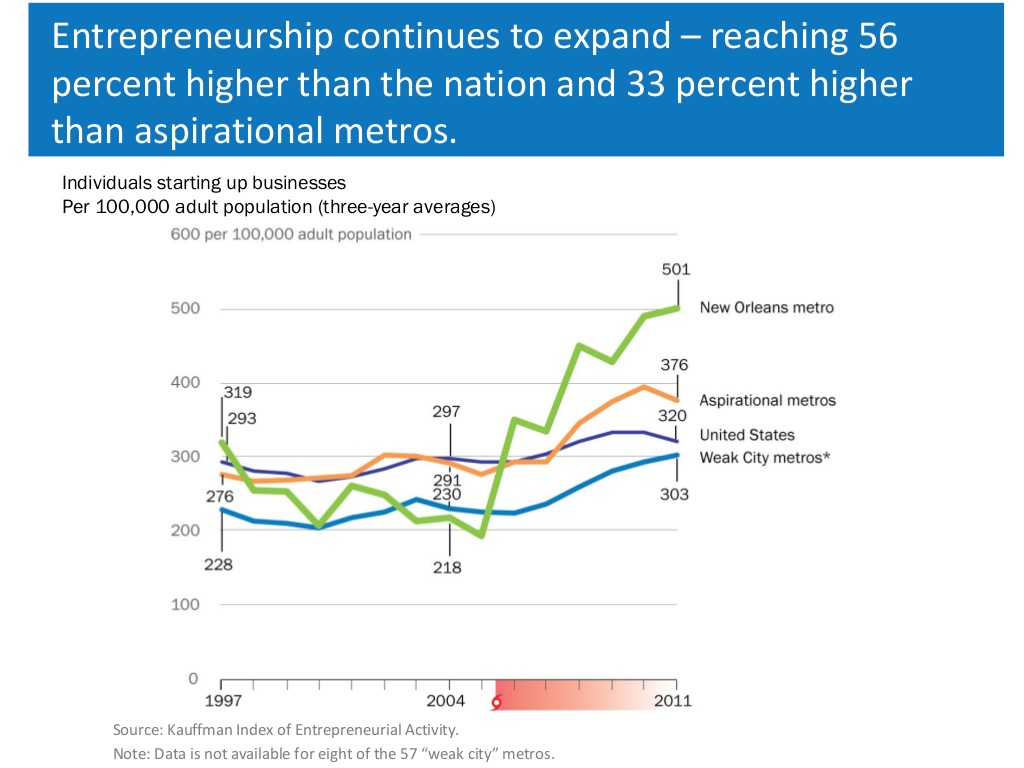
Ezra Boyd---Declarations of the death of an American city have given way to new reasons to be optimistic about New Orleans’ future.  Anyone who has visited the city recently will tell you that the metro area is well into a robust period of re-population and recovery.


The numbers support this view. New Orleans itself has regained 80% of it’s pre-flood population, while the larger metropolitan region has regained over 90% of it’s population.  A strong recovery has fueled a strong economy, and the tech sector in particular has gained national prominence.  While the neighborhoods continue to recover, the federal, state, and local governments have vigorously invested in improved flood protection and coastal restoration.  The Corps has spent $15 billion in structural projects, while local governments across the region continue to invest in levees, wetlands, and home raising.  At the state level, Louisiana’s ambitious $50 billion 2012 Coastal Master Plan has identified projects that contribute to multiple lines of defense for the coastal region.  While these positive signs have been covered extensively, this article examines another reason for optimism that has not gotten as much attention, but could prove to be the saving grace:  Climate trends.


NorthAtlanticOcillation-nao_correlation_mapIn particular, there are early signs that the North Atlantic Oscillation (NAO)and the Atlantic Multidecadal Oscillation (AMO) could be entering the end of the recent period that spawned the memorable gulf coast storms of recent years. The AMO is a climate trend in the North Atlantic ocean that influences the frequency and severity of hurricanes in the Atlantic basin, while the NAO is a similar climate trend that influences the paths that hurricanes follow.  It is one of several periodic global climate trends, similar to the El Niño Southern Oscillation (ENSO). In general, periodic climate trends follow somewhat regular temporal patterns in severity, with a peak and a low point which are separated by many years. Climate studies have found that NAO influences hurricane activity … specifically along the Gulf coast. Generally speaking the high activity periods last for about 15 years and are separated by 30 years of low activity.


There is one caveat to keep in mind, human induced global warming and sea level rise will almost certainly influence the NAO and AMO trends, specifically in terms of the both intensity and duration of the peaks. Indeed, we ran our post by Dr. Jeff Masters at Wunderblog, and he promptly, kindly replied: “The proper pattern to refer to is the Atlantic Multidecadal Oscillaion (AMO), which entered a positive phase in 1995, launching our current active hurricane period.While the NAO is important for steering hurricanes, it is not important for influencing the total number of hurricanes, nor how strong they get. Since the AMO is tied to sea surface temperatures (SSTs), and SSTs were above average in the tropical Atlantic again this year, I think it is unlikely that we are seeing early signs of an end to the active AMO period that began in 1995. The inactivity this year was due to atmospheric circulation patterns that brought much dry air to the tropical Atlantic.”


The last 20 or so years have certainly been a period of high activity in the Atlantic basin and specifically in the Gulf of Mexico.  Starting with Hurricane Andrew in 1992, the peak period of the NAO also includes many memorable storms: Georges (1998), Ivan (2004),Katrina (2005), Rita (2005), Ike (2008), and Isaac (2012).  Of note, if you take 1992 as the start of the peak period, we are now 21 years into that peak period.  Going back into recent history, the previous peak period of high hurricane activity consists of Hurricane Audrey in 1957 which killed over 400 in southwest Louisiana, Hurricane Betsy (1965) which caused levee breaches in the Industrial Canal and caused 75 deaths in Louisiana, and Hurricane Camille(1969) which was similar to Hurricane Katrina in intensity and killed over 250 along the Mississippi Gulf Coast.  After enduring the 12 years of devastation between Audrey and Camille, the Gulf coast breathed a sigh of relief as the low period in the NAO meant no major storm impacts for almost 30 years between 1969-98.


What will the next 20 to 30 years for the Gulf coast be like?  This year could be some indication.  Despite predictions of high hurricane activity in the Atlantic basin, the year included no major storms in the Atlantic or Gulf of Mexico.  Just two storms, Tropical Storms Audrea and Karen, took aim for coastal Louisiana at some point.  However, in both cases the storms were sheared apart by a jet stream that extended south over Louisiana and that sent most of their remaining moisture to Alabama and Mississippi.

Other storms either followed tracks across the southern Gulf of Mexico or up the Atlantic coast.  While the 2012 Hurricane season certainly generated memorable events along with widespread devastation in Southeast Louisiana, it is important to keep in mind that Hurricane Isaac was not a strong storm.  It was a slow moving storm with a track that exploited the vulnerabilities of Louisiana declining coast.


2012_accumulated_tracks

Source: LSU Earth Scan Laboratory -Click pic to enlarge

While it is difficult to predict trends in the complex atmospheric dynamics that influence hurricanes, their strengths, and their intensities, the available data does support the notion that the NAO is entering a possible 30 year period of lower hurricane activity in the Gulf of Mexico.  If so, this period provides a unique and important window to finish our recovery and build upon the momentum toward enhancing protection and fostering mitigation.  It also potentially provides a period to implement important coastal restoration projects, such as those in the Louisiana Master Plan.

However, there are also two lessons to keep in mind.  One, global warming and sea level rise could change everything that we think we have learned about climate trends.  And, two, during the last period of calm we focused on just structural protection through levees, floodgates, and pump stations.  We made a fatal error in neglecting measures to enhance coastal and community resiliency.  When the peak of last NAO cycle brought Hurricane Katrina, this error taught us a powerful lesson that focusing on just structural protection was a mistake.  Even though many of engineering shortcomings have been addressed, the catastrophic levee failures of 2005 can happen again.

To reinforce that lesson, Hurricane Isaac was not a strong storm.  Rather, it was a deadly and destructive storm partially because it’s path produced a storm surge in areas where our coast had lost its resilience due to erosion and wetland loss.  Perhaps, the biggest lesson from Hurricane Isaac is that we cannot repeat this mistake during the next 30 year period of potentially low activity.
~Dr. Ezra Boyd, is a hazards geographer, disaster scientists and co-founder of DisasterMap.net, which provides real time disaster monitoring along with consulting in risk analysis and hazards geography. Prior to launching this business, he worked with the Lake Pontchartrain Basin Foundation as a coastal scientist and GIS specialist. At the Basin Foundation, his major projects include the Multiple Lines of Defense Strategy for flood protection for greater New Orleans, monitoring and assessing the impacts of the 2012 BP Oil Well Blowout, the Bohemia Spillway, and Mardi Gras Pass, an emerging distributary of the Mississippi River. His research on the preparations, response, and impacts of Hurricane Katrina has been published in Risk Analysis; Public Performance and Management Review; Risk, Hazards, and Crisis in Public Policy; and the International Journal of Systems Biology and Biomedical Technologies. An upcoming article in the Journal of Emergency Management will describe a coordinated surveillance program in response to the 2010 BP Oil Well Blowout. In 2011, he earned his Ph.D. in geography with a minor in disaster science and management from Louisiana State University.  His dissertation presented a comprehensive assessment and analysis of deaths associated with Hurricane Katrina and the catastrophic failure of the Federal levee system for southeast Louisiana.. While at LSU, he participated in the Team Louisiana report for the Louisiana Department of Transportation and Development and co-authored the Health Care and Disaster Planning book for the Louisiana State Medical Society.

~Special thanks to Dr. Jeff Masters at Wunderblog for his prompt response, helping us better understand the Atlantic Multidecadal Oscillation and Climate Trends.


Monday, January 6, 2014

Skeptics continue to mock the idea of climate change despite 2013 'best evidence'

Measuring the summer Arctic melt

Measuring the summer Arctic melt
Marsha Hunt---In spite of the polar weather sweeping much of the world and the extreme temperatures, fires, earthquakes and other activities identified with climate change, many people still deny the earth's atmosphere is changing, forcing the governments to develop inertia over making recommended changes.  So what is the present evidence and what do people need to know to understand that local weather anecdotes are not the same as rigorous science and that the consequences of doing nothing far outweigh the policies of corporations whose money-making notions interfere with the knowledge and changes we need.

Although there have been many articles and reports supporting scientific evidence of climate change, a significant faction of folks continue to mock the ideas, rattling their verbal swords on social media sites and trivializing the problem that is creating major problems around the world.

And while Al Gore initiated the efforts to bring the attention of the world to the anticipated problems observed by scientists decades ago, and has been mocked for those efforts, nevertheless the facts, as unfolding and substantiated by scientific research across the world, the climate is changing; and the impact of this is enormous, experts remind us. The criticisms against Gore have also been printed many times, but according to those who have followed his pronouncements over the years and reviewed the accusations, his main premise of the threat of climate change to the world's welfare has been found to be true much of the time.

Even the naysayers of the early Gore pronouncements, like former President George W. Bush, now agree there is indeed something to the urgent need to change direction and reexamine priorities when it comes to climate change, such as reducing pollutants that are said to be behind much of the problems.

Remarks by present naysayers indicate certainly that there are many people who have firmly decided the notions of climate change as being man-made are not true and simply part of backdoor politicians aligned with scientists to make money on the issue, while others, like Palin, make remarks that often poke fun at the ideas of it altogether.

Palin's remarks in 2013 reflect the rightwing notions that some say stand in the way of the changes needed to combat climate change.  She said, "I've been hearing all this hootin' and hollarin' from the liberals about how CO2 is going up to levels we haven't seen in 5 million years," Palin told Fox and Friends' host Gretchen Carlson. "But the truth is, life was pretty good millions of years ago. "There were plenty of plants and animals back then, and they did just fine in the heat. And as Earth starts to warm up, all our old friends will start coming back. The polar bears might die off, but think of all the dinosaurs we're gonna get!"

While some folks look at the polar weather and maintain that means the earth is actually getting colder and proving scientists wrong, the science has observed repeatedly the term "climate change" refers to the extremes in both directions, of hot and cold weather patterns; and that the overall direction of the earth's temperature is actually going up.

The most useful information for the world economies has less to do with the topics of immigration and economic reform than what scientists say is responsible for what might be particularly devastating, and has been for many already, and that's the consequences of climate change that include more hurricanes, typhoons, tornadoes and weather conditions that can negatively impact millions.  2013 reflected the greatest evidence yet of the negative impact of climate change, according to science experts.  And these conditions require large outlays of money and manpower to overcome or control, something which will become even more difficult in the future.

Saturday, December 7, 2013

Human health jeopardized by water shortages in rural Alaska


[caption id="attachment_21785" align="alignleft" width="300"]Water tank in Alaska Water tank in Alaska[/caption]

Gordon Matilla---Alaska is known for its fishing villages, oil and gas wells and the beauty of the frozen landscape, but it's in the outback areas where water shortages are making it difficult for those who live in Alaska's rural villages. So what are the consequences of limited water in these areas?

Water is needed for many purposes, outside of drinking and cooking. Water is used for cleaning and general hygiene, so the quantity and the quality of available water is important.

In places where water is scarce people use communal basins for washing their hands. But this allows infectious particles to travel from hand to hand. It means more diseases, as the washbasins serve as places to transfer diseases.

Recent research in Alaska has found that people who live in places where there is plenty of water are likely to be healthier than those people in Alaska in the rural areas where water is more limited.

Many communities in rural areas have difficulty paying oil and gas bills to fix aging systems that are filing. So as prices rise, functioning systems are unaffordable. Climate change is a further problem, adding to the difficulty with the systems of containing water and storing it.

A number of different organizations are trying to improve the situation by providing and improving water services in some of these Alaskan villages.

There are a variety of entities in Alaska working towards improving health outcomes in rural Alaska by providing and improving water services in villages. The U.S. Arctic Research Commission (USARC) is coordinating these groups so there can be an improvement in Arctic human health.

Wednesday, December 4, 2013

Social media platforms foretell the future through examination of worldwide events

Facebook
Communication device for social media contacts

Editor--Can we tell the future by watching and reading Facebook or Twitter? Some folks believe we can and that in doing so we can create better avenues for dealing with problems by knowing each other, our wants and needs better.  But how does this happen?

Facebook, Twitter and other social media channels tend to record our moves, our likes and dislikes and our online behavior.  Internet research tells us that social media is a tool to help better comprehend and anticipate human behavior.

"It is undeniable that social media (provides) an extremely rich source of information, and it makes sense to exploit that data to make predictions or forecast future trends of offline phenomena," says Daniel Gayo-Avello, who is among the guest editors for the current issue of Internet Research.  "There are also measurable differences in the way that credible and non-credible (social media) messages spread. Special measures can be used to filter out those messages that are not trustworthy."

Gayo-Avello goes on to say that statistical methods combined with social media data can help build predictions models.says the studies also suggest that using statistical methods, in which external (but scarce) data is combined with social media data to build a predictive model, can be a promising approach.

"Up to now, a number of different scenarios-such as (those related to) the economy, politics, health or event detection-have been studied with varied results. For instance, prediction of flu and other epidemic outbreaks seem to be reasonably predictable on the basis of user-generated content," says Gayo-Avello. "Social media can be used to at least predict the present. It can be used as a proxy measure for variables that cannot be measured in real time on a general basis, such as unemployment rates or public opinions on a number of issues."

 Bill Balderaz, president of Fathom Columbus,  notes his company uses social media to predict certain outcomes, including the most recent presidential elections.  They correctly predicted who would win.

"Social media is the largest, fastest and most uninhibited focus group ever created. (The Internet Research studies) demonstrate that knowing how consumers feel is a predictor of how they will behave," says Balderaz, who's confident his firm can accurately predict everything from stock prices to climate change based on social media conversations.

"It's not as hard as you would think," says Balderaz. "We use historical data correlations to predict the future. We analyze social media patterns going back years, then we correlate social media conversations with real events."

So it is possible to predict the future using trends on social media.  So while participants wonder how their personal information and habits are used, perhaps some of it will end up with good intentions, like predicting an epidemic enough in advance that people can get medicines and help in time.

Sunday, November 17, 2013

The mutant strains of human species: Are you a redhead?

[caption id="attachment_20954" align="alignleft" width="300"]Rhonda Fleming Rhonda Fleming[/caption]

Carol Forsloff----Are you a redhead with blue eyes? If so, you are considered a mutant, someone who has recessive genes both with the red hair and the blue eyes. Are you someone who is also different enough to be a mutant in the human species?

Despite protestations to the contrary, most people strive to be like everyone else. And as a matter of fact, most of us share 98% of our genetic makeup, however over the centuries our similarities to our human ancestors have changed dramatically so that we bear few similarities to them with respect to how we look.

Brown eyes and dark hair are the dominant genes. Red hair is the rarest of hair colors, with only 3 to 6% of the population of the world who have red hair. It is ordinarily associated with very fair skin and light colored eyes. Brown-eyed redheads, however, are more dominant than blue eyed redheads, because of the dominance of the brown-eyed gene. Still two brown-eyed parents can have a blue-eyed child Still the redhead with blue eyes is particularly rare compared with other people.

Most redheads originate from the British Isles. Scotland is said to have the most redheads at 13% of the population, and 40% are said to carry the redhead gene.

In the United States only 2% of the population are natural redheads. For centuries it was considered so unlucky to have red hair that in ancient Egypt redheads were burned alive. Today, however, they are just the mutants of the world, but, if you liked Red Buttons, the comic, and Rhonda Fleming, the actress, they can surely be funny or beautiful or even both. And if you are one of these mutants, these days you likely won't be burned alive for being one, but people will exclaim nonetheless about that unique characteristic, likely with some degree of envy that they don't stand out from the crowd like one of you. both.

Tuesday, November 12, 2013

Environmentally sound idea for home building might includeunconventional building materials

straw bales
Straw bales can be used as building materials
Charity Bailey---Advances in modern technology combined with a concern for the environment have prompted many people to to choose unconventional building materials for home construction. They do so for a variety of reasons. Some are trying to use eco-friendly products that will make less of an impact on nature. Others want to use recycled materials to cut down on the amount of waste that accumulates on a daily basis. Saving money and using products that are more durable are other justifications for thinking outside of the box when it comes to building homes. Here are some of the most popular alternative building materials:

Straw Bales for Insulation

Straw has become a versatile alternative to conventional methods of insulating a home. Bales of straw can be packed in very tightly, and they work so effectively that they can actually result in dramatic decreases in energy costs. Homes using straw insulation tend to be warmer in the winter and cooler in the summer. Straw bale homes are also fire resistant when the bales are packed very carefully and closely together by someone who is knowledgeable about this approach. This is a natural way to provide insulation, and it will not expose residents to toxic materials. Plus, it costs less than conventional materials.


Plastic and Glass Bottles

There is no shortage of plastic and glass bottles on this planet. Homeowners can take advantage of a potential source of waste and make good use of it. Bottles filled with compacted sand become an extremely durable building material. They are considered safe as well. Many individuals who are environmentally conscious appreciate the fact that they are cutting back on the amount of litter that would otherwise go into a landfill.


Shipping Container Homes

Many people are going the route of shipping containers for a home. If they are lucky to have the right location, they can open up one of the side panels and have an open air atmosphere. Containers are easy to heat and cool because of their small size as compared to a traditional home. These are perfect for people who are looking to trim all of the excess stuff in their lives and want the basic essentials without all the fluff.


Cordwood

Cordwood is gaining in popularity as well. Builders can take advantage of the scrap heap at the lumberyard, use leftovers from other projects or comb forests for fallen wood. The wood acts as an excellent insulator after it is thoroughly dried and stacked. It's inexpensive compared to traditional materials, and it makes use of excess materials or those with imperfections that would otherwise be wasted.


Recycled Rubber

Recycled rubber is another great choice for home builders that benefits the environment as well. Rather than loading up landfills, discarded tires and rubber scraps can be put to good use in a variety of ways. It can be used in flooring, roofing shingles, insulation and as a protective building coating. Rubber is built to last and resists water, two positive qualities. Plus, using rubber is a more economical choice, which makes it ideal for those on a budget.

--------------------------------------------------------------------------------------------------------------------------------

This article was provided by Charity Bailey, Environmental Studies student and earth-friendly consumer. 

Thursday, November 7, 2013

Philippines super typhoon brings more evidence of climate change, increasingly severe storms

[caption id="attachment_20827" align="alignleft" width="300"]Philippines storm Philippines storm[/caption]

Editor---"Let me repeat myself: This is a very real danger, and we can mitigate and lessen its effects if we use the information available to prepare," President Benigno S. Aquino III was quoted as saying in a national TV address Thursday as residents were warned of a potential calamity to it the Philippines, as scientists have predicted might happen as a consequence of climate change.

While the naysayers of past years, and some who continue to be despite contrary evidence, deny climate change the worsening storms are but a signal of more to come, scientists declare.  Those in the scientific community who have said otherwise were not the graduates of the better schools nor the higher levels of the scientific community; but there were those who nevertheless used their evidence to say that weather events like Hurricane Sandy and now the violent storm in the Philippines are but the usual and customary of weather changes that take place in the natural order of events.

Now the evidence is grave, and graver still are the predictions of the future.  The time to prepare for that worst scenario came more than 15 years ago, as Al Gore declared the world must prepare for climate change.  And even as a few nations began to consider scientists warning to be serious, key nations continued to find reasons why climate change just wasn't so.

Former President Bush was one of those who scoffed at the notion of climate change, along with key politicians in his administration.  Later Bush was to admit that human behavior had some impact on climate in negative way, but the process of protecting people and making the right plans for the coming storms was put in the back drawer for folks to worry about later.

It is now time to worry, scientists say and that collaboration and sacrifice must take place, or all the discussions of government shutdowns, health care quarrels and debates over abortion will continue to cover up the neglect in outlining what the world needs most, attention to the details of climate change and cooperation to prevent the worsening events.

The typhoon in the Philippines is said to have been fueled by the warm waters in the region.