Showing posts with label climate change. Show all posts

Thursday, February 5, 2015

Anti-science, anti-government tactics seen at heart of health emergencies

File:2012 Homeland Food Defense.pdf
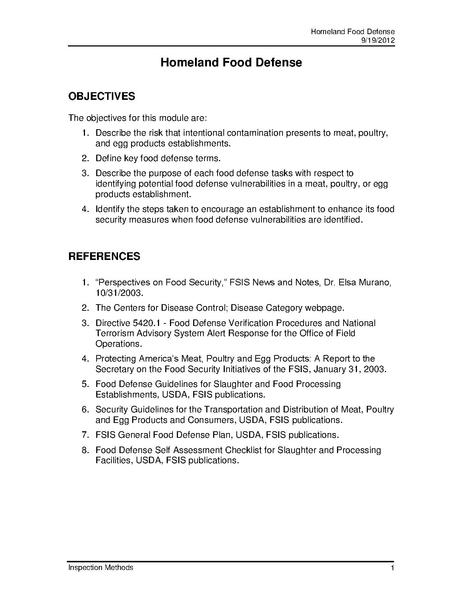
Food defense information from Department of Homeland Security
Are you against vaccinations?  Do you believe the government is hiding facts about disease and related issues or exaggerating claims about it?  Do you deny climate change is in part caused by man's behaviors?  If so, you are among those seen as part of the growth in health emergencies.

It is a world problem, experts say. The growth of skepticism and those who foster beliefs that are contrary to science can hurt many people.

Thursday, January 22, 2015

Safe rooms considered to be new haven for increase in weather disasters

Safe area arranged for storage and pets
Carol Forsloff - For regions impacted by severe storms, having a safe place in the house to go and wait it out, and potentially be away from harm, is critical according to experts, so if folks have to make a choice in a budget for remodeling, that safe room is important.

Pictures showing a terrible storm on April 3, 1974, which is referred to by experts as "the largest and most cataclysmic tornado on record for a single 24-hour period" was a surprise to the people of 13 states and one Canadian province, as the storm traveled across an area of 900 miles, killing 148 people. 

Saturday, January 3, 2015

Hawaii's potential flooding reflects how climate change impacts disadvantaged most

View of Makaha Valley on the Waianae Coast from Makaha Valley Towers
The Waianae Coast offers some of the most authentic of the
culture in Hawaii, as well as some of its most beautiful scenery and pristine beaches.  It was once the haven of Hawaii's royalty.  But in modern times it now is home for many of the poor of the islands, who face the impact of climate change most, just as in other areas of the world.

Tuesday, April 1, 2014

Citizen cooperation urgent re climate change, humanitarian crises


It was more than a decade ago, when Al Gore sounded the alarm on climate change. Global warming may have been a misnomer to some, but scientists declared then that if the nations of the world did not act in reducing carbon emissions, there would come a time when there would be no turning back, and environmental disasters would create widespread humanitarian crises. The urgency for doing something to reverse the impact of climate change, however, is undermined by politics, resulting in continuing inertia in responding to what scientists now tell us can no longer be ignored.


What Al Gore labeled “An Inconvenient Truth” is far from just inconvenient, scientists remind us. It is a truth that requires action and actually might be better termed “ugly” more than inconvenient.


The United Nations released a report on global warming a few days ago with the details that are another reminder of the grave consequences of doing nothing about the environment right now. Scientists say,“The evidence is overwhelming: Levels of greenhouse gases in the atmosphere are rising. Temperatures are going up. Springs are arriving earlier. Ice sheets are melting. Sea level is rising. The patterns of rainfall and drought are changing. Heat waves are getting worse, as is extreme precipitation. The oceans are acidifying.” 


The dilemmas in reducing carbon emissions involve the need to maintain a growing world population which requires energy sources. It takes more energy to plant food as the numbers of people to feed increase. Transportation needed to take goods from one place to another means additional fuel. Many human needs require energy sources, these needs coming at a time when possible options either take too much time and resources or would cause environmental problems as well.


While conservatives scoffed about climate change, and it became fashionable to make fun of Al Gore rather than focusing on the urgency of agreements that might have reduced pollution levels sufficiently to make a difference. Despite the warnings of scientists, people maintained it was either God's will for the earth to be destroyed or if climate change was occurring it this was simply part of an ongoing pattern that has been going on for thousands of years.


The argument against the scientists' predictions was the accusation they had been based solely on financial gain for themselves and their research. Politicians countered claims of man-made climate change with the opinions of scientists who disagreed with their peers. These disagreements helped to convince some people and confuse others. The man in the middle was immobilized by the divisions, so the tacit decision left was to go with the most emotionally rewarding notion in the short run, that man's activities could effect little change on what was foreordained by God or the ordinary course of climate changes that had occurred since earth's creation.


The apathy and ignorance, and the lack of willingness of politicians to take responsibility means the inevitable consequences of environmental disasters scientists remind us will create humanitarian havoc in the days and years to come. They tell us that the environmental upheavals will take their course, and that we have not seen the worst. But this declaration of inevitability simply cements the apathy, for if there is nothing man can do, the best thing might be to protect oneself as much as possible financially and to enjoy the moments now. That too is no good answer.


The blame has not been shouldered responsibly in ways that create action, although there is enough blame proverbially to be passed around. While progressives point to environmental challenges that must be met by changes, few agree on what they need to be, outside of the reduction of pollution levels that contribute the climate change. Without the knowledge, and acceptance, of individual responsibility; the problems may not be solved simply at the top.


While the news media reports, and the governments wrangle, the scientists and the people in the middle hold the key not to finger pointing blame but to future practice that will involve every citizen who wants to stay alive and who wants the generations to come to have a peaceful place to live. It is a shared responsibility, shared by folks of all political persuasions and religious beliefs.


Yet while the Democrats recently spent an evening in a talkathon on what to do about climate change, Fox News continued its denials in the same pattern as has occurred in more than a decade. With Fox the more popular channel, it is likely convincing the masses will be difficult to do. And when politicians offer laws and orders, the inability to accept the problem of climate change will likely result in continued inertia and the march to environmental chaos. For it is not a political problem but made one by those whose vested interests in the status quo outweigh the needs of the people most likely to be hurt in the humanitarian crises that scientists tell us will occur as a result of doing either nothing or not enough.


Friday, January 17, 2014

UN Secretary General underlines urgency of nations acting re climatechange

[caption id="attachment_5320" align="alignleft" width="480"]Arctic Ocean where ice caps are melting, as evidence of climate change Arctic Ocean where ice caps are melting, as evidence of climate change[/caption]

UN/ GHN Ed---It is no longer if but when major catastrophes will happen in various parts of the world, as key leaders around the world gathered this year to discuss some of the world's problems.  Ban Ki-Moon began with a key speech outlining the urgency of nations individually taking responsibility for problems that are accelerating climate change and subsequently the problems that develop from it.

The information from world forums is particularly important given the fact scientists tell us the earth is continuing to warm, with this last year having the highest temperatures recorded in modern history. And the number of weather disasters continue to plague much of the planet, in response to the lack of cooperation among nations for that part of climate change brought about by human behavior.

It was the occasion of the World Energy Summit presently held in Abu Dhabi.  These are some of the highlights from his remarks:
The decisions we make today on energy will have far-reaching consequences.

The prevailing fossil fuel-economy is contributing to climate change - and global energy needs are growing rapidly.

In 20 years, energy consumption will rise by 40 per cent, mostly in developing countries, where 1.6 billion people still lack access to electricity, and where 3 billion people rely on traditional biomass fuels for cooking, heating, and other basic household needs.

Our challenge is transformation. We need a global clean energy revolution – a revolution that makes energy available and affordable for all.

This is essential for minimizing climate risks, for reducing poverty and improving global health, for empowering women and meeting the Millennium Development Goals, for global economic growth, peace and security, and the health of the planet.

At the same time, the World Economic Council is examining energy options through forums involving major stakeholders in a number of energy industries.  The decisions from these stakeholders, and the politics of the various countries where they reside, are key factors in whether or not the plans set by the United Nations Secretary and the members of the world summit on climate change end up focusing on green initiatives, as suggested by Secretary General Ban-Ki Moon or maintaining the status quo, which scientists maintain is a framework for continuing a problem that will only grow larger in the future.


Friday, January 10, 2014

New Orleans future optimistic, weather experts predict


Ezra Boyd---Declarations of the death of an American city have given way to new reasons to be optimistic about New Orleans’ future.  Anyone who has visited the city recently will tell you that the metro area is well into a robust period of re-population and recovery.
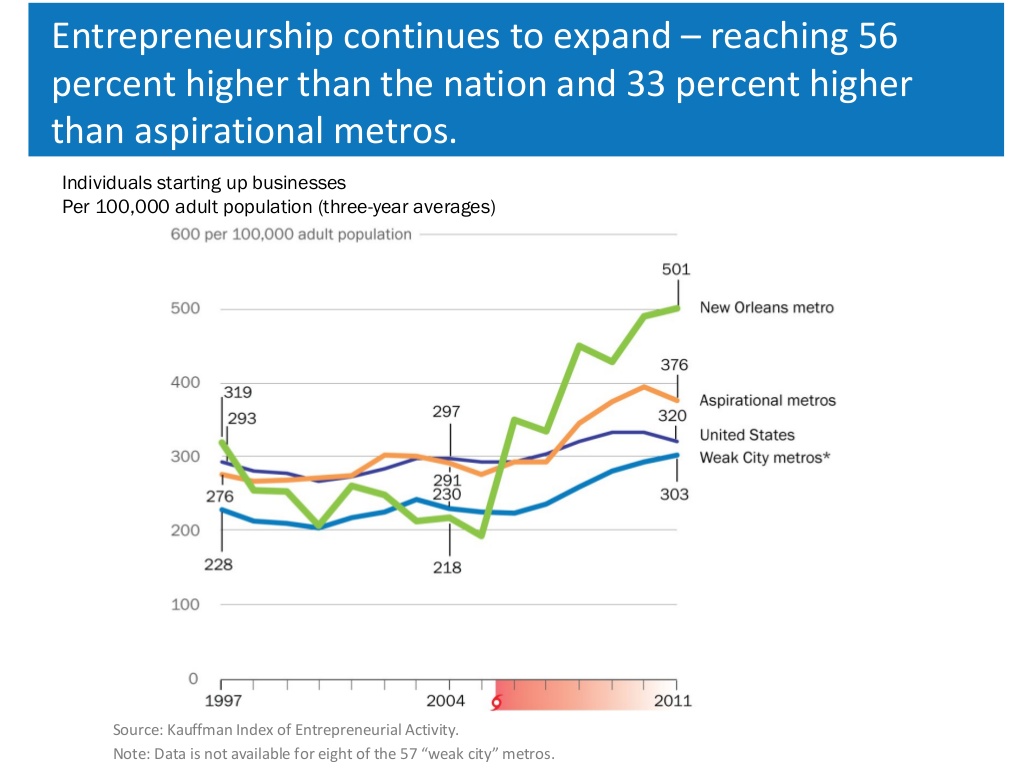


The numbers support this view. New Orleans itself has regained 80% of it’s pre-flood population, while the larger metropolitan region has regained over 90% of it’s population.  A strong recovery has fueled a strong economy, and the tech sector in particular has gained national prominence.  While the neighborhoods continue to recover, the federal, state, and local governments have vigorously invested in improved flood protection and coastal restoration.  The Corps has spent $15 billion in structural projects, while local governments across the region continue to invest in levees, wetlands, and home raising.  At the state level, Louisiana’s ambitious $50 billion 2012 Coastal Master Plan has identified projects that contribute to multiple lines of defense for the coastal region.  While these positive signs have been covered extensively, this article examines another reason for optimism that has not gotten as much attention, but could prove to be the saving grace:  Climate trends.


NorthAtlanticOcillation-nao_correlation_mapIn particular, there are early signs that the North Atlantic Oscillation (NAO)and the Atlantic Multidecadal Oscillation (AMO) could be entering the end of the recent period that spawned the memorable gulf coast storms of recent years. The AMO is a climate trend in the North Atlantic ocean that influences the frequency and severity of hurricanes in the Atlantic basin, while the NAO is a similar climate trend that influences the paths that hurricanes follow.  It is one of several periodic global climate trends, similar to the El Niño Southern Oscillation (ENSO). In general, periodic climate trends follow somewhat regular temporal patterns in severity, with a peak and a low point which are separated by many years. Climate studies have found that NAO influences hurricane activity … specifically along the Gulf coast. Generally speaking the high activity periods last for about 15 years and are separated by 30 years of low activity.


There is one caveat to keep in mind, human induced global warming and sea level rise will almost certainly influence the NAO and AMO trends, specifically in terms of the both intensity and duration of the peaks. Indeed, we ran our post by Dr. Jeff Masters at Wunderblog, and he promptly, kindly replied: “The proper pattern to refer to is the Atlantic Multidecadal Oscillaion (AMO), which entered a positive phase in 1995, launching our current active hurricane period.While the NAO is important for steering hurricanes, it is not important for influencing the total number of hurricanes, nor how strong they get. Since the AMO is tied to sea surface temperatures (SSTs), and SSTs were above average in the tropical Atlantic again this year, I think it is unlikely that we are seeing early signs of an end to the active AMO period that began in 1995. The inactivity this year was due to atmospheric circulation patterns that brought much dry air to the tropical Atlantic.”


The last 20 or so years have certainly been a period of high activity in the Atlantic basin and specifically in the Gulf of Mexico.  Starting with Hurricane Andrew in 1992, the peak period of the NAO also includes many memorable storms: Georges (1998), Ivan (2004),Katrina (2005), Rita (2005), Ike (2008), and Isaac (2012).  Of note, if you take 1992 as the start of the peak period, we are now 21 years into that peak period.  Going back into recent history, the previous peak period of high hurricane activity consists of Hurricane Audrey in 1957 which killed over 400 in southwest Louisiana, Hurricane Betsy (1965) which caused levee breaches in the Industrial Canal and caused 75 deaths in Louisiana, and Hurricane Camille(1969) which was similar to Hurricane Katrina in intensity and killed over 250 along the Mississippi Gulf Coast.  After enduring the 12 years of devastation between Audrey and Camille, the Gulf coast breathed a sigh of relief as the low period in the NAO meant no major storm impacts for almost 30 years between 1969-98.


What will the next 20 to 30 years for the Gulf coast be like?  This year could be some indication.  Despite predictions of high hurricane activity in the Atlantic basin, the year included no major storms in the Atlantic or Gulf of Mexico.  Just two storms, Tropical Storms Audrea and Karen, took aim for coastal Louisiana at some point.  However, in both cases the storms were sheared apart by a jet stream that extended south over Louisiana and that sent most of their remaining moisture to Alabama and Mississippi.

Other storms either followed tracks across the southern Gulf of Mexico or up the Atlantic coast.  While the 2012 Hurricane season certainly generated memorable events along with widespread devastation in Southeast Louisiana, it is important to keep in mind that Hurricane Isaac was not a strong storm.  It was a slow moving storm with a track that exploited the vulnerabilities of Louisiana declining coast.

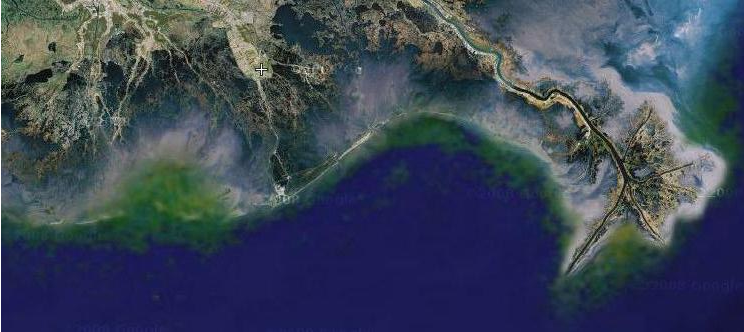
2012_accumulated_tracks

Source: LSU Earth Scan Laboratory -Click pic to enlarge

While it is difficult to predict trends in the complex atmospheric dynamics that influence hurricanes, their strengths, and their intensities, the available data does support the notion that the NAO is entering a possible 30 year period of lower hurricane activity in the Gulf of Mexico.  If so, this period provides a unique and important window to finish our recovery and build upon the momentum toward enhancing protection and fostering mitigation.  It also potentially provides a period to implement important coastal restoration projects, such as those in the Louisiana Master Plan.

However, there are also two lessons to keep in mind.  One, global warming and sea level rise could change everything that we think we have learned about climate trends.  And, two, during the last period of calm we focused on just structural protection through levees, floodgates, and pump stations.  We made a fatal error in neglecting measures to enhance coastal and community resiliency.  When the peak of last NAO cycle brought Hurricane Katrina, this error taught us a powerful lesson that focusing on just structural protection was a mistake.  Even though many of engineering shortcomings have been addressed, the catastrophic levee failures of 2005 can happen again.

To reinforce that lesson, Hurricane Isaac was not a strong storm.  Rather, it was a deadly and destructive storm partially because it’s path produced a storm surge in areas where our coast had lost its resilience due to erosion and wetland loss.  Perhaps, the biggest lesson from Hurricane Isaac is that we cannot repeat this mistake during the next 30 year period of potentially low activity.

~Dr. Ezra Boyd, is a hazards geographer, disaster scientists and co-founder of DisasterMap.net, which provides real time disaster monitoring along with consulting in risk analysis and hazards geography. Prior to launching this business, he worked with the Lake Pontchartrain Basin Foundation as a coastal scientist and GIS specialist. At the Basin Foundation, his major projects include the Multiple Lines of Defense Strategy for flood protection for greater New Orleans, monitoring and assessing the impacts of the 2012 BP Oil Well Blowout, the Bohemia Spillway, and Mardi Gras Pass, an emerging distributary of the Mississippi River. His research on the preparations, response, and impacts of Hurricane Katrina has been published in Risk Analysis; Public Performance and Management Review; Risk, Hazards, and Crisis in Public Policy; and the International Journal of Systems Biology and Biomedical Technologies. An upcoming article in the Journal of Emergency Management will describe a coordinated surveillance program in response to the 2010 BP Oil Well Blowout. In 2011, he earned his Ph.D. in geography with a minor in disaster science and management from Louisiana State University.  His dissertation presented a comprehensive assessment and analysis of deaths associated with Hurricane Katrina and the catastrophic failure of the Federal levee system for southeast Louisiana.. While at LSU, he participated in the Team Louisiana report for the Louisiana Department of Transportation and Development and co-authored the Health Care and Disaster Planning book for the Louisiana State Medical Society.

~Special thanks to Dr. Jeff Masters at Wunderblog for his prompt response, helping us better understand the Atlantic Multidecadal Oscillation and Climate Trends.


Monday, January 6, 2014

Skeptics continue to mock the idea of climate change despite 2013 'best evidence'

Measuring the summer Arctic melt

Measuring the summer Arctic melt
Marsha Hunt---In spite of the polar weather sweeping much of the world and the extreme temperatures, fires, earthquakes and other activities identified with climate change, many people still deny the earth's atmosphere is changing, forcing the governments to develop inertia over making recommended changes.  So what is the present evidence and what do people need to know to understand that local weather anecdotes are not the same as rigorous science and that the consequences of doing nothing far outweigh the policies of corporations whose money-making notions interfere with the knowledge and changes we need.

Although there have been many articles and reports supporting scientific evidence of climate change, a significant faction of folks continue to mock the ideas, rattling their verbal swords on social media sites and trivializing the problem that is creating major problems around the world.

And while Al Gore initiated the efforts to bring the attention of the world to the anticipated problems observed by scientists decades ago, and has been mocked for those efforts, nevertheless the facts, as unfolding and substantiated by scientific research across the world, the climate is changing; and the impact of this is enormous, experts remind us. The criticisms against Gore have also been printed many times, but according to those who have followed his pronouncements over the years and reviewed the accusations, his main premise of the threat of climate change to the world's welfare has been found to be true much of the time.

Even the naysayers of the early Gore pronouncements, like former President George W. Bush, now agree there is indeed something to the urgent need to change direction and reexamine priorities when it comes to climate change, such as reducing pollutants that are said to be behind much of the problems.

Remarks by present naysayers indicate certainly that there are many people who have firmly decided the notions of climate change as being man-made are not true and simply part of backdoor politicians aligned with scientists to make money on the issue, while others, like Palin, make remarks that often poke fun at the ideas of it altogether.

Palin's remarks in 2013 reflect the rightwing notions that some say stand in the way of the changes needed to combat climate change.  She said, "I've been hearing all this hootin' and hollarin' from the liberals about how CO2 is going up to levels we haven't seen in 5 million years," Palin told Fox and Friends' host Gretchen Carlson. "But the truth is, life was pretty good millions of years ago. "There were plenty of plants and animals back then, and they did just fine in the heat. And as Earth starts to warm up, all our old friends will start coming back. The polar bears might die off, but think of all the dinosaurs we're gonna get!"

While some folks look at the polar weather and maintain that means the earth is actually getting colder and proving scientists wrong, the science has observed repeatedly the term "climate change" refers to the extremes in both directions, of hot and cold weather patterns; and that the overall direction of the earth's temperature is actually going up.

The most useful information for the world economies has less to do with the topics of immigration and economic reform than what scientists say is responsible for what might be particularly devastating, and has been for many already, and that's the consequences of climate change that include more hurricanes, typhoons, tornadoes and weather conditions that can negatively impact millions.  2013 reflected the greatest evidence yet of the negative impact of climate change, according to science experts.  And these conditions require large outlays of money and manpower to overcome or control, something which will become even more difficult in the future.

Monday, August 5, 2013

Top eco-friendly changes to business friendly to earth and bottom line

[caption id="attachment_14341" align="alignleft" width="300"]Internet telecommuting can be eco-friendly for businesses Internet telecommuting can be eco-friendly for businesses[/caption]

Mike Gordon---As climate change becomes a greater issue, many businesses are seeking to minimize their carbon footprint. From becoming Leadership in Energy and Environmental Design (LEED) certified, to going paperless, companies, both large and small worldwide, have begun to incorporate green practices into their business models. Below are just a few of the ways businesses are becoming environmentally friendly.


Going Paperless

In the past, businesses used large amounts of paper for printing. Paper was used to print memos, corporate communication, invoices, documentation, newsletters, and much more. Today, companies make their businesses green by incorporating electronic communication. By sending emails and memos to through a company intranet, or email system, companies are greatly reducing the amount of paper that is used to communicate agendas and other statements. Reducing the amount of paper used results in the preservation of trees and forested areas.


If companies find that they must print, it is recommended that they use recycled paper in order to re-use paper that is no longer relevant and prevent the cutting of more trees. This paperless practice also serves to minimize the amount of greenhouse gasses that are emitted into the atmosphere as a result of paper processing plants.


Reduce the Wastage of Water and Energy

Many companies have polices whereby all electronics that are not being used are switched off. Many employees will leave computers switched on when they take a lunch break, leave for long meetings, or even when they leave at the end of the day. This practice can waste thousands of dollars in electricity costs if done by enough employees. By instructing employees to shut down computers and other technology when not in use, it can not only save the company money, but it will reduce the amount of energy that is needlessly resourced every year.


The same rule applies for water usage. This can be remedied by installing automatic faucets in bathrooms and kitchens which will prevent the overuse of running water when an employee is not present.


Use Reconditioned Office Supplies and Machinery

There are many computers that are being reconditioned or refurbished and brought back onto the market. Business owners can also purchase vehicles for their businesses from a reconditioned vehicle dealer. Hybrid company vehicles also serve to lower emissions and create a green office environment.


Becoming LEED Certified

By installing solar panels, reflective roofing materials, or other environmentally-friendly constructs, businesses can earn a LEED certification which makes them eligible for government incentives and other credits.


Telecommuting

Some companies have adopted telecommuting, in order to reduce the time spent on the roads in cars that emit too much CO2. By telecommuting, employees are encouraged to work from home or a local area in order to minimize greenhouse gases and promote a paperless work environment as the majority of the work will be done via computer.


Today, the government, and environmental agencies are offering companies with certain incentives so that they may go green. It will benefit companies financially and ethically to pursue green business practices.

-----------------------------------------------------------------------------------------------------------------------------------------------

This article was provided by Mike Gordon, eco-friendly business school grad and tech geek. 

Tuesday, July 16, 2013

Climate change deniers continue to refuse support for going green at earth's peril

Tar sands risks
Tar sands risks
Melinda Owens---The naysayers on the issue of man’s contribution on climate change continue to interrupt the progress of moving forward to improve environmental concerns that continue to threaten the earth’s climate.

Rep. Henry Waxman, Democrat of the 33rd District of California,  asserts there is a  “climate disconnect” between the increasingly warmer earth temperatures and how congressional representatives vote, who reject science and cast their votes against science, as reported by the League of Conservation Voters.

Scientists continue to warn governments and individuals that climate change is seriously impacting weather patterns that produce more powerful storms, record heat waves, water shortages and flooding all over the world.

Check here to see your Congressman’s voting record.

This is an old story, denying climate change, as Republicans asserted that it was either not occurring or not happening as a result of anything done by man.    At the heart of the dissension is a Republican Party strategist named Frank Luntz, who said in a leaked memo,  ‘The scientific debate is closing [against us] but not yet closed. There is still a window of opportunity to challenge the science.’

Jim Jeffords  left the Republican Party in 2001 over the issue of climate change, referring to Luntz’ remarks as “outlandish” and asserting , 'They have a head-in-the-sand approach to it. They're just sloughing off the human health impacts - the premature deaths and asthma attacks caused by power plant pollution,' Jeffords said.

The denials, more than ten years ago, that were initiated years before at the outset of the Repbulican Party’s victory for the Presidency in 2000, meant years of the public’s hearing there were two sides to the climate change debate.    Today that debate continues, even as scientists remind us that the earth will see more and more rapid change in climate conditions that will inevitably create increasingly devastating weather events, even as many congressional members refuse to support efforts to do anything about it.


----------------------------------------------------------------------------------------------------------------------------

Melinda Owens is an environmental activist from the Midwest who has advocated for environmental responsibility for more than 25 years.


Friday, February 8, 2013

Failure to act responsibily part of present weather emergencies

[caption id="attachment_6561" align="alignleft" width="401"]Storm of the century Storm of the century[/caption]

Editor — While many people around the world are focusing on the great storm beginning to hit the Northeastern part of the United States, the really big news is that the major news networks have not done enough to highlight the root causes. In a world where every fact must have an opposite, it seems, as opinion often rules the news, what is that major news?

Vanessa Kritzer, who is Online Campaigns Manager for the League of Conservation Voters, spells out her frustration in a recent press release, underlining the importance of looking at the root causes of our weather conditions. It is that focus that might make the real difference, she explains as she declares:

From record-breaking heat waves and massive wildfires to historic droughts and Superstorm Sandy, we’ve seen with our own eyes the increasing severity and frequency of extreme weather events this past year.

Yet in reporting on these disastrous events, the nightly news programs at the major broadcast networks have largely ignored what is fueling this extreme weather – climate change.

As the effects of climate change cause hardship for families across America, we need better coverage if we want people to connect the dots and demand real action to curb global warming and pollution.

In fact, that's why the organization is circulating a petition for viewers to demand that mainstream media take responsibility and let people know what is happening in the environment at the heart of these disastrous weather events. They are asking that other networks emulate PBS Newshour in its coverage of climate change.

CNN.com today is relating the sequence of details of the present storm, accenting the specific conditions, and letting people know that the same region hit by Hurricane Sandy is getting hit again.  But why is that true and what is the evidence this may continue?

SFGate writes it frankly by observing what many scientists are saying about the future. "Within the lifetimes of today's children, scientists say, the climate could reach a state unknown in civilization."  This phrase alone tells us that there are dangers ahead that will only increase. It also is a reminder of the need to act regarding CO2 emissions. This information comes from the leading scientists, not the off-the-block ones tied to political interests, as is observed in scientific publications and those journals who are focusing on the science as opposed to the miscellaneous political debates.

We should be reminded that in 2006 it was widely noted that then President George W. Bush was denying human-induced climate change. The infusion of politics in the science that many maintain is critical to understand so that people can act responsibility meant delays in that action.

The chairman of the Royal Commission on Environmental Pollution, Sir John Lawton, the chairman of the Royal Commission on Environmental Pollution in 2005 called climate change deniers in the US "loonies", observing how global warming "is to blame for the increasingly strong hurricanes being spawned in the Atlantic."

In other words, by calling the science opinion, and therefore debatable, has made the situation worse. That's the biggest headline today: how the world failed to act and that the Northeastern part of the United States, and other places, will surely feel the impact of that failure, according to the scientists, who years ago warned of the crisis.


Saturday, February 2, 2013

Here are the devastating weather forecasts for North America

Editor --While Groundhog Day brings prediction of an early spring for the United States, the news isn't good for the climate in general, according to the latest report of a team of Cornell researchers.  In fact, they have determined that the earth will face serious challenges from climate-induced weather storms and catastrophes that will require serious governmental intervention across the world.

[caption id="attachment_16780" align="aligncenter" width="568"]Hurricane Sandy's projected path Hurricane Sandy's path according to original predictions[/caption]

According to Drew Harvell, professor of ecology and evolutionary biology, and David Wolfe, professor of horticulture, Americans can expect more heat waves, greater and greater amounts of rainfall causing floods and droughts,  with an increasing rise in ocean temperatures and acid levels.   The lack of intervention with reference to greenhouse gas emissions could exacerbate these conditions.  This is particularly critical since 64 million people live in highly populated areas that can be impacted by climate change, so that people in the Northeast may suffer extreme situations like Hurricane Sandy.

"This document will be an essential science-based resource for decision-makers in our communities and businesses who are rolling up their sleeves to take on the challenges and build resilience to climate change," said Wolfe.

Highlights of the report for 12 Northeast states include these findings:

  • Heat waves, coastal flooding due to sea level rise and river flooding from extreme precipitation events will increasingly threaten the region's environmental, social and economic systems.

  • These climate-related hazards, along with increased pressure from pests and disease, will stress agriculture and ecosystems. Research and outreach efforts are under way to help farmers cope.

  • State and municipality-level measures to implement adaptations are still at early stages, even though many local and state governments and organizations have begun planning for climate changes.


So could there be another Hurricane Sandy with devastating consequences again?  Scientists maintain climate change has indeed made storms bigger and more threatening.  And scientists also say that North America will be particularly prone to these storms, something even those in the insurance business now believe as well.  Scientific American quotes a selection from an article in the New Yorker that states Munich Re, one of the world’s largest reinsurance firms, did a study of severe weather conditions and wrote, “Nowhere in the world is the rising number of natural catastrophes more evident than in North America.”

President Barack Obama declared he would make environmental protection and action on climate change a priority in the next four years.  Scientists tell us it is an urgent one.

Saturday, January 12, 2013

'Historic' Washington rally scheduled on climate change

Russian winterCarol Forsloff ---More than a dozen years have passed since scientists underlined the importance of taking action on climate change and mentioned that within a few years of that time, it might be too late. Even so, activists are putting together a major rally referencing the need for the world's leaders to finally pay attention to what many intimate is the gathering storm of climate change.

In an email message this morning, a writer wrote of the freezing weather in Russia at  fifty degrees below zero, a level of temperature which has created significant problems for the people. An example used is the traffic lights in the city of Yakutsk aren't working anymore. At the same time, the world scientists report that worldwide the temperatures were the hottest on record. Weather patterns are extreme, as demonstrated by Russia's frigid temperatures, the heat in many parts of the United States in the summer of 2012, and the terrible storms, such as Hurricane Sandy, that left thousands homeless and caused devastation along the country's eastern seaboard.

A climate rally is anticipated to bring thousands of individuals to Washington on February 17 to generate pressure on the nation's leaders to support those activities designed to mitigate climate problems. One of those issues has to do with the tar sands project, with the pipeline from Canada that some tout as the solution for the energy crisis. The Sierra Club hopes to send a message to President Obama that the time to act is now, asking him to veto the tar sands project and another proposed ventures the organization maintains could create even more serious problems for the world's environment.

Researchers point out that scientists in the path used to believe that climate change took place slowly, which was the belief through much of the 20th century. However, circumstances in the past 20 years have created alarm in the scientific community, along with dire warnings. It was only 1995 when a strong consensus statement came from the Intergovernmental Panel on Climate Change, representing views of nearly all the world's climate scientists. And what these scientists reported was that climate change could take place even more rapidly than previously thought and that "surprises" were possible.

It is those "surprises" that worry activists and scientists, as the rally organizers point out it is important for ordinary citizens to ask world leaders to take action by making decisions that will reduce the negative impact on global climate.


Saturday, November 24, 2012

Say you're sorry to Al and embrace an inconvenient truth

[caption id="attachment_17034" align="alignleft" width="200"] Al Gore, receiving Nobel Peace Prize[/caption]

Carol Forsloff — He was made fun of by the left and right, by much of the mainstream press, as well as the blogstreams, while his wife divorced him. The man who would be President more than 12 years ago gave early warnings now being embraced by those who ridiculed him for years. Let's say we're sorry to Al.

Al Gore proclaimed a crisis for the environment. He quoted the scientists of the day, that day even before George Bush Jr. was elected President, ushering the eight years of  Republican denial, represented by folks such as Donald Trump, and the Democrat's lack of critical focus on what is now said to be the most important and critical issue facing not just the American people but the entire world.

Global warming is a fact, most of the top scientists say., especially after this most recent major weather event in the United States, Hurricane Sandy. The naysayers came from the ranks, not of the top, award-winning groups, but those who had graduated from the lesser ranks of Universities and were more easily dissuaded by political involvement. And there were many of these who even maintained that many of the gases released into the atmosphere were actually beneficial for the environment. Now the naysayers, for the most part, say little or nothing, as climate change has taken public attention, after major storms that have swamped many areas of the world.

An Inconvenient Truthwas inconvenient for masses of folks who have proclaimed the need for drilling in the Arctic or for deeper drilling into ocean waters to be a paramount necessity to maintain America's grand thirst for energy and supremacy as well. The Kyoto Treaty, which focused on the international agreement to curb toxic emissions into the earth's atmosphere, was mocked as a vessel for other nations to promote their own agendas or the need for scientists to receive more money for what were ridiculed as misadventures in science. But that Treaty allowed that first step in recognizing that climate change is a global problem.

We all remember movies that generated great enthusiasm for world cooperation from outside invaders. The film Independence Day likely comes to mind for most, as the threat of invaders from outer space brought world cooperation to find a solution that would remove the threat from destroying the world.

It is that cooperation that is needed now, the United Nations reminds us, as does other agencies devoted to focusing on issues that impact us all.

So let's say we're sorry to Al, who opened up the discussion on a broad scale, and who sacrificed his reputation, his marriage and potentially the Presidency, as he was made a target of derision those 12 years ago and counting. And let's respect his standing up and speaking out about the risks of climate change and the need for international cooperation and alternative energies by remembering and taking action as he once advised and accepting as an honest appraisal of our environmental dilemmas, that inconvenient truth.

Saturday, June 23, 2012

Real Hope Demands Action

Bob Ewing--Real hope will empower, false hope does endanger. False hope prevents action and encourages a sit back and wait because things are going to get better. The reality is things will change but without inter4vnetion there is no guarantee, they will improve. I just finished reading an article by George Monbiot, in Common Dreams. The Earth Cannot be Saved by Hope and Billionaries first published on Tuesday, June 19, 2012 by The Guardian/UK

Monbiot is talking about RIO20 and its failure to develop any significant means for dealing with the issue of global climate change. Since the first Summit in 1992, world leaders have been talking about how each Summit will set right the array of problems connected to global warming, while the reality is that they have done little to make any difference. The situation is growing worse not better so why do we still have hope, is the question Monbiot addresses.
The question that needs asking is, if we agree that global climate change is a major threat to human life, is there still time to reverse the damage? The second question is what steps exist today that society has the ability to take that will reduce the human impact on our home?
Unfortunately, there is a debate still being waged over the human role in climate change, some say humans are the sole cause while others say humans have played no role at all.

[caption id="attachment_15562" align="alignnone" width="300"] Los Angeles skyline seen through smog on I-10 westbound near the I-5 interchange.[/caption]

This combination of natural causes, a recurring cycle, for example and human behaviour is a third perspective.
Before we move on let us look at the difference between climate and weather.
The difference between weather and climate is a measure of time. Weather is what conditions of the atmosphere are over a short period of time, and climate is how the atmosphere "behaves" over relatively long periods of time. When we talk about climate change, we talk about changes in long-term averages of daily weather.
I do not believe that humans are the sole cause of global warming but the fact that a debate rages and often fiercely makes it very difficult to undertake any action which could mitigate the human impact. However, humans have, indeed, had and are still having an impact on the planet. Pollution and litter are two visible examples.
There is much that we could do to reverses the harm that humans have done to the planet and develop sustainable communities while we are doing so.
The United Nations Secretary-General has called for a Green New Deal saying:
“Climate change threatens all our goals for development and social progress. Indeed, it is the one true existential threat to the planet.”

“On the other hand, it also presents us with a gilt-edged opportunity. By tackling climate change head-on we can solve many of our current troubles, including the threat of global recession. We stand at a crossroads. It is important that we realize we have a choice. We can choose short-sighted unilateralism and business as usual. Or we can grasp global cooperation and partnership on a scale never before seen.”

There is hope in what Ban says but does the will that is required, exist to do the work. I sense that it is missing and that people on all sides of the debate would rather sit around and debate than get out there and actually take action.
Let me give an example of one project that if duplicated in municipalities across the world would help reduce the amount of greenhouse gases we are spewing into the atmosphere, create employment and provide food.
First let us look at what an economy is. An economy is based upon trade.

We go to the marketplace, either in person or digitally, and buy the goods (cabbages, shoes, DVDs, meat) we need. We also enter the market place to purchase services such as healthcare and education.
Urban agriculture which is simply the growing of food and the production of food based items (jams, jellies, eggs and so on ) in urban setting, cities, towns and villages, not only reduces the amount of fossil fuels used to move goods across country but when done organically reduces the pollutants used to grow the goods.
This has a positive effect on the community. If urban agriculture is combined with community energy generation then we create jobs and clean, renewable energy, such as wind, solar, micro hydro. There are spin offs in practical research and development of appropriate wind and solar technologies for urban settings.
I believe we have the knowledge and skills to take the steps we need to reduce the human impact on our planet and thus mitigate the effects of global warming. I am much less certain that the will or desire to do so exists at a level that will make a difference. Too many people are simply arguing and doing nothing.

So, yes we can reverse the human element of global warming the question is will we and even if we develop the will is there still time?

Thursday, May 17, 2012

Butterflies and a Missed Opportunity

 Bob Ewing --“Butterflies have migrated across Eastern Canada this spring in unprecedented numbers, reflecting the warm winter throughout North America and raising alarm bells about what it might mean for other species.”

The comments section of the CBC story, about the increase in butterflies in Eastern Canada, for the most part, shows that readers missed the real opportunity this story offers. The commentors prefer to toss around the climate change football with the supporters saying this shows climate change is real, and others denying that it is.

Change is natural and, in fact, is the only thing we can count on. The increase in the number of butterflies demands attention but discussion is better focused on what this means from an ecosystem perspective.

What changes does an increase in a species mean for the ecosystem within which that change occurs? The simplest way to understand this is to look at the food chain.

The food chain provides information about whom or what eats who or what, in other words, who is predator and who is prey. This may sound simple, except for the fact that all living things play both roles, predator and prey. Modern humans, when it comes to food, do their hunting, for the most part in grocery stores and farmers markets, and all they need to feed themselves is money or access to money or credit.

Back to the butterflies, they are eaten by and eat other beings within the ecosystem. When the number of butterflies increases the food the butterflies consume is in greater demand and supply will eventually be impacted. More butterflies mean more snacks for birds and other beings which dine on the winged wonders.

This will, for a time increase the supply of the birds etc. This means that those that feed on birds have a bigger buffet to pick from and so on and so on until something happens and balance is restored. What we do not know is what changes actually take place within the ecosystem when the balance is upset.

The missed opportunity I referred to in the opening of this piece is a learning one. Events, such as an increased migration of butterflies, or the death of bats, provide us with both a formal and informal means to develop classroom and other discussions around how ecosystems function.
When we study food chains and the interconnected relationships between the various members of the chain we are able to gain an understanding of how Nature works.

Everything eats and this is the common ground that connects us all together. Everything plays a role and we do not really know what role any one element plays until after it vanishes, and things begin to change. Balance is likely to be restored, and life continue but we do not know what that life will be like.

What we do know is that a creature had someone for lunch and was someone else’s lunch.

Questions remain: Who will go uneaten and who will go unfed if that creature is removed from the ecosystem?

What effects will these changes bring? These are questions that need to be answered before we shrug off a species’ disappearance, and roll on as though nothing of import took place.

Thursday, May 19, 2011

Water, water everywhere while some cities may run out of water

While Mississippi is getting flood waters one foot higher than experienced before in modern history, the Southwest is parched, thirsty and aching for relief, showing the wide variations of environmental desperation in the United States.

[caption id="attachment_4613" align="alignleft" width="300" caption="Dry lake in Nevada"]Dry lake in Nevada[/caption]

Across Texas fires have intermittently threatened some of the state's major cities, with the accent on the North and Central areas and the Dallas - Fort Worth areas feeling the heat as well.   Places like Tucumcari, New Mexico have had fires at the edge of town, with the surrounding areas bleak and dry.

Las Vegas that drinks from Lake Mead, sharing its water demands with Los Angeles,  is more than 100% below the usual and customary water levels.  Las Vegas is one of the ten cities in the United States reported in 2010 to be running out of water.    Water indeed is in short supply along the Nevada corridor from the middle of the state to its border with California.  Lakes are running dry, and the sandy bottoms raised in a fashion not seen in many years.

Climate change is considered by scientists to be at the heart of these wide variations in climate, which can be seen in a travel across the country.  Bearing witness in person to what scientific studies relate and various news media announce gives one a level of understanding to recognize how important it is for individual responsibility and energy options to mitigate what is said to be increasing environmental risks.

Texas, New Mexico, Mississippi, Arizona, Louisiana, Arkansas and Tennessee are feeling the pain, the kind of pain where the wounds are apparent, and it is water, too much and not enough, at the center of the problems.

Tuesday, February 1, 2011

Energy challenged by currents events through the prism of climate change


[caption id="attachment_6558" align="alignleft" width="300" caption="Windmills"][/caption]

GHN Editor
- While all eyes are on Egypt and the weather problems, it also calls attention to the long-range effects of how energy can be interrupted to force some nations to continue activities that increase greenhouse gases, so here is welcome news that might bring news thoughts on these crises.

Federal agencies in the Pacific Northwest and Alaska walked their talk in 2010
and significantly reduced their carbon footprint. Through energy
efficiency, waste diversion, lighting retrofitting, and water saving
projects, federal agencies reduced
their combined footprint by 380 million pounds of CO2e. This is the
equivalent of taking 33,000 passenger vehicles off the road for a year.
These reductions also resulted in cost savings of more than $1 million
in 2010.

This week at the third annual Federal Green Challenge
Symposium in Portland, the U.S. Environmental Protection Agency will
announce the 2010 Champions of Environmental Leadership and Green
Government Awards.

The program recognizes individuals and initiatives in the federal
government that have gone beyond regulatory compliance and have reduced
their greenhouse gas emissions. These agencies have proven results
towards an overall goal of five percent or more reduction in GHG
emissions.


The 2010 Champions of Environmental Leadership and Green
Government Awards are part of the Federal Green Challenge, a
comprehensive federal program to reduce the federal GHG footprint.

The following agencies have been recognized for their outstanding green projects in 2010:


Overall Environmental Leadership Award: Bonneville Power
Administration, Energy Smart Federal Partnership – Since 2001, energy
efficiency projects have been completed with 21 federal agencies,
producing more than 170 million kWh per year of electricity savings, as
well as gas, steam, and water savings in the Pacific Northwest.
Waste Award: Joint Base Lewis-McChord, Waste
Diversion Program – JBLM achieved an 85 percent waste diversion rate
(with construction and demolition) in 2010. This is up from 77 percent
in 2009. This can be attributed to the comprehensive diversion program
which in 2010 alone was responsible for the diversion of almost 67,000
tons of waste and over $3 million in avoided costs.


Energy Award: Bonneville Power Administration, Grand Coulee Dam – The
lighting retrofit project at 20 hydro electric facilities, 20
transmission facilities, and 15 hatcheries has saved a megawatt of
electricity, allowing that megawatt to serve the electricity needs of
the Pacific Northwest. The new system provides more and better quality
light while saving about 50 percent of overall lighting energy usage.


Water Award: General Services Administration, Thomas A. Foley,
U.S. Courthouse, Spokane, WA. - In 2010, the Foley Courthouse Team
field tested touch-less/self-closing faucets in the public restrooms and
introduced new landscaping practices. The Courthouse saved a total of
385,220 gallons of water, a 12.32 percent reduction in 2010 by
implementing these projects.

Thursday, August 12, 2010

Heat waves intensifying in mid-latitudes a growing emergency

Carol Forsloff - "Heat
waves are a growing concern and current climate models indicate they
will increase in duration and intensity especially in the mid-latitudes
of which Indiana and the Midwest is a part," says climate researcher and
IUPUI
Professor Daniel Johnson.


When
we think of heat waves, we are inclined to think of the tropics or those
instances in cities, but now patterns are showing up in places
unexpected like Russia and the mid-section United States.


Scientists believe, however,  these heat waves will only intensify, especially in the areas of the Midwest.


"Heat
waves are known to kill hundreds of people in the United States every
year and are the leading cause of weather-related fatalities; usually
outstripping the combined effects of hurricanes, tornadoes, lightning
and flash floods. "says Professor Daniel Johnson.


Johnson
is a climate researcher and Indiana University-Purdue professor in
geography.  He observes that climate models show heat waves are going to
increase both in duration and intensity, especially in the
mid-latitudes, which includes Indiana and the Midwest.


"One
of the most likely disasters to strike the Central Indiana region is an
extreme heat event of considerable duration and strength," Johnson says.


Johnson
and his team are examining the impact on urban populations of the heat
waves in order to help emergency personnel with both mitigation and
response efforts to incidents caused by these heat waves.


Other meteorologists voice similar concerns.  One of them, Jeff Masters, has similar concerns about climate change expressed by Al Gore in "An Inconvenient Truth" and Johnson, as he looks at patterns according to DemocracyNow


This
is a summary statement based upon a review by Democracy Now of
scientists statements and projections:   "Wildfires across Russia.
Devastating floods in Pakistan. Deadly landslides and flash floods in
India and China. Heat wave across the United States. Severe drought in
Niger. Taken together, scientists warn the events match predictions for
extreme climate events caused by global warming. This year is on track
to be the warmest since reliable temperature records began over a
century ago, mainly due to a buildup of greenhouse gases from fossil
fuels."


It is,
Johnson indicates by his research preliminaries, time to prepare for
increasingly hot temperatures in anticipation of the emergencies and
health problems that can come about for people, especially diabetics and
seniors who are especially vulnerable in hot climate temperatures.


Al
Gore warned about these climate changes, got the Nobel Prize for his
efforts to combat problems related to climate change and has been the
joke of the non-believers.    He said at the time the world was reaching
a tipping point, according to the scientists of the world, and his
film,
"An Inconvenient Truth" underlined the problems.


Naysayers
remark, however, scientists only do these things because they want more
money to keep their jobs through doing research and that their
pronouncements are simply scare tactics.  One writer has examined a
petition that had been sent around to get people to sign their
disapproval of investigations and conclusions about climate change.


The petition did not do well, according to the writer,
who talks about "science bypass" in his journal, the Mind of Dan, because
most of the major scientific groups, in all areas, believe through
scientific evidence and testing, in climate change.


But
Russia's fires, scientists say, in an area not known for such heat waves
and the devastating floods in Pakistan,  as well as heat waves in the
U.S. Mid-west provide strong evidence of the problems related to climate
change and global warming.


Johnson
tells us these issues are serious enough to warrant his research to
help the world prepare for the worst because of the safety and health of the people.


What if Al Gore and Johnson are right?

What about Indiana and Russia?

Sunday, August 8, 2010

What if Al Gore was right about climate change?

Carol Forsloff - A giant ice island breaks off Greenland; and it is time to break out the
jokes on Al Gore again, but what if Gore and the scientists are right.
Will that be funny too?


Today's news, which is reported in press releases, newspapers, and
organizations around the world, discusses a massive ice island, or huge
glacier described large enough to be 4 times that of Manhattan island,
has broken off Greenland.  What does that mean?


Most scientists interviewed for a variety of sources don't talk about
imminent dangers, as the "island" can break up, keep proceeding south
and interrupt shipping or it may just hang around its parent, Greenland,
for the foreseeable future.


It is hypothesized, however, to be part of the pattern of climate change.


Al Gore, cited internationally for his pronouncements on climate change,
has been used as the comedic football for those who disparage climate
change.  Today there is new evidence that says he might just well be
right.  Scientists can't say for certain the present glacier breaking
off Greenland is part of that climate change.  They also say they can't
say it isn't.


Russia is suffering from fires so large, so all-consuming that the
health risks have become serious.  Pakistan is experiencing huge floods,
greater than experienced in many, many years.  The U.S. south and east
coasts, as well as parts of the interiors of the country, have had
double-digit temperatures off and on for more than a month.


Should climate change be a serious discussion or remain the arena for
jokes? The deniers have grown quiet as climatologists express concern
about climate shifts, air and water pollution and serious weather
conditions. 


On Sunday radio Gore is once again the brunt of jokes associated with climate change.


What are the risks if Gore was wrong and what more might they be if he's right?


Saturday, June 26, 2010

Oceans endangered more by new, accelerated erosion of Antarctica iceshelf


The oceans, now compromised by oil and by rising sea levels caused by climate change, may be further endangered by a new scientific discovery of an underwater ridge that no longer sustains one of Antarctica's glaciers.

The discovery of an underwater mountain ridge by scientists unravels the mystery of why Antarctica's Pine Island glacier is rapidly disappearing.

The discovery was made by a robot submarine sent beneath the glacier's floating ice sheet which has indicated a ridge rising 400 metres from the sea floor.   Scientists tell us that until recently the glacier would have rested on this ridge, preventing warm seawater from melting the ice from underneath.  What the submarine has found, however, is that the submarine no longer rests on the ridge.  It has thinned to the extent, the glacier now rests and floats above it, according to Nature Geoscience that has reported this phenomenon. 

"Once you tip the glacier off the ridge, it continues to thin, and this allows even more warm water over the top of the ridge, so it reinforces the whole process," says Adrian Jenkins of the British Antarctic Survey.

A study using modeling determined previously that if such a ridge did exist, then if the glacier retreated behind it, it would not be able to recover.  In other words, the melting would continue, which is the cause of the rising waters of the world's oceans.

"The study confirms our concern that this is a major area of ice mass loss that could be sustained," says Christian Schoof of the University of British Columbia in Vancouver, Canada. 

The scientists give this ominous conclusion, "Pine Island glacier is one of a handful in West Antarctica which together are estimated to be responsible for about 10 per cent of global sea-level rise."