Showing posts with label pain medication. Show all posts

Friday, September 5, 2014

Pain management is a basic human right

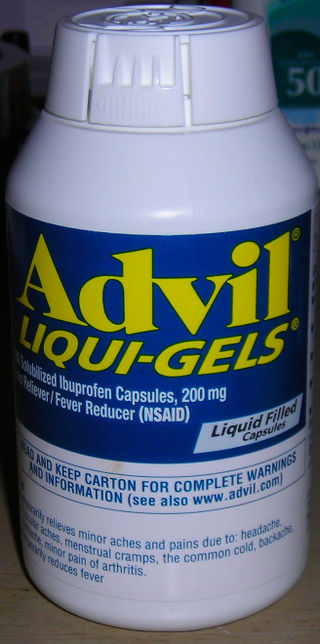
Advilbottle.jpg
Advil, over the counter treatment for pain
Carol Forsloff - "This has gone on for too long. Pain has been regarded as a simple problem. It must be recognized as a disease in its own right." This has been the declaration of the World Congress on pain, yet it remains an issue with many doctors, as they are torn between too much medication and too little in helping people with long-term pain complaints.

The problems related to addiction to painkillers are said to be growing.  At the same time physicians find themselves in the middle many times.  Patients need pain medications, yet if a doctor prescribes too much of it, or does not track the amount given with the medications given by other doctors, then an individual can end up with an addiction that may be difficult to control.  And that may lead to additional problems as well.

Drug counselors worry about prescription drugs being used by people who don't need pain management but look for that high they feel they get when they have something like Vicodin, as an example.

The World Congress has declared pain relief to be a basic human right.  Yet many peopole live with chronic--or even acute---pain because of the complications raised by prescription drug abuse.  80% of people, however, are said not able to get relief because of this.

Doctors in the United States fear law enforcement and problems if they give too much pain medication.  Others are concerned about addicting patients.

Even of those drugs like marijuana, that recent research has found is not a gateway drug, and also found useful for the treatment of pain, is not legal in many countries.

The World Congress on pain pleads with governments to establish policies and laws to address the basic right of people to have relief from pain.  They saw that veterinarians get more training in how to manage pain than many primary care physicians.

In the undeveloped world, many just don't have access to healthcare and most have low or no access to pain medication.About 70 percent of children in (Australia and the United States) the terminal phase of life with cancer had severe unrelieved symptoms and
severe pain,  World Congress officials believe this is unconscionable.


The most common types of pain are those related to the back, head and joints.  The variety of over-the-counter medications are said to usually be sufficient to maintain control over much of the chronic pain patients who need help in managing their pain.  The problem is when the chronic pain at times becomes acute, or sudden; and the over-the-counter medications are insufficient.

In addition to the quandary doctors have in making determinations about medications for pain, many doctors lack the training, or even the compassion, related to pain.  Some have the same orientation toward pain culturally as others in their same cultural group.  And for some cultures, pain is something one does not complain about but simply bears.

Pain is what people might complain about, but how and where one complains can also be an issue.

All of these concerns about pain make it a complex situation for patient and doctor alike, that in each case has to be individualized.  Still it makes a difference when the world recognizes that pain management is just as much a human right as anything else and therefore worthy of world attention.

Tuesday, May 14, 2013

Prescription opioids can lead to addiction and death

prescription drugs
Prescription drugs
Oleg Reznik — Various forms of addictions and drug addictions in particular have been increasing in the US over the past thirty years and probably longer before that. Health Policy Review published in 2007 indicates unintentional drug poisoning mortality rates increased on average 5.3% per year from 1979 to 1990 and 18.1% per year from 1990 to 2002; the rapid increase during the 1990s was attributed mostly to narcotics.

I have been treating addictions, parallel to my family practice, for the past seven years, and experienced these figures directly. While generally more fear and public dismay are centered around heroin use, the prescription opioids have been mostly hidden from the public eye till the past several years.

While the use of heroin has been increasing, both rate of increase and the absolute number of people affected, are much higher for prescription opioids. Between 1999 and 2002, the number of opioid analgesic poisonings on death certificates increased 91.2%, while heroin and cocaine poisonings increased 12.4% and 22.8%, respectively.

The same Health Policy Review has even more striking figures: the US, which constitutes about 5% of the world population, consumes 80% of world’s supply of pharmaceutical opioids.

Under the guise of “chronic pain management”, we in effect have legalized opioid distribution and consumption to unprecedented levels. There has been a 542% increase of New Abuse of Prescription Opioids Among Teenagers from 1992 to 2003. Here methadone, oxycodone, fentanyl, hydromorphone, hydrocodone, and morphine top the list.

A 2010 Morbidity and Mortality Weekly Report indicates that in 2008, drug overdoses in the United States caused 36,450 deaths. Opioid pain relievers were involved in 14,800 deaths (73.8%) of the 20,044 prescription drug overdose deaths. Death rates varied fivefold by state and were related to the rates of prescribing of these medications. In 2009, 1.2 million emergency department (ED) visits (an increase of 98.4% since 2004) were related to misuse or abuse of pharmaceuticals, compared with 1.0 million ED visits related to use of illicit drugs such as heroin and cocaine. In 2007, nearly 100 persons per day died of drug overdoses in the United States. The death rate of 11.8 per 100,000 population in 2007 was roughly three times the rate in 1991. Prescription drugs have accounted for most of the increase in those death rates since 1999.

The problem of prescription opioid use is multifaceted. First, there is a false perception of safety, as it is a pharmaceutically manufactured medication subject to various regulations and oversight. Second, there is also a lack of social stigma attributed to the street “hard drugs.” Third, there is a general acceptance among professionals and general public of the philosophy of drug dependence. Drugs that were originally meant for the management of acute traumatic pain, surgical pain, or terminal pain, have earned a place for the various daily aches and pains for which only half a century ago (and today in most developing countries) they would never be considered.

The view of health has changed from the one that places value on autonomous function on multiple levels accessible to a human being, to the one in which comfort takes number one place. Physical comfort took precedence over the capacity to participate in emotional, mental, social, family and spiritual life. Physical longevity took precedence over living a full life, since fullness of life cannot be quantitatively measured, or broken down into categories that can easily be compared to others.

The view of health-as-taking-drugs (non-habit forming drugs included), and disease as a random affliction, unrelated to the everyday life, contributes to this problem.

Other forms of addictions, including addictions to food, sexually related addictions, legal drugs, gambling, have existed for millennia and their magnitude is difficult to evaluate. I do not believe there has ever been a historical precedent to a regulated and systematically implemented addiction (daily use for many years) of the present day prescription opioid pain relievers.

Help is available, but the most common problem with treading addictions is an underestimation of their power. Relapses and switching to different forms of addictions are much more common than true recoveries. Accepting help from others is important, as self-deception is the very nature of addiction. True healing takes nothing less than a profound self-transformative process, and entails addressing issues with family, friends, and social network.


About the Author

Oleg Reznik, MD is a board certified family physician and book author, practicing in Oregon for ten years. He is the author of the book The Secrets of Medical Decision Making. Dr Reznik has a holistic approach to health, using conventional as well as alternative healing modalities, and treating addictions. Visit him online at www.olegreznikmd.com. 

Sunday, February 26, 2012

Pain patients suffer in fallout from prescription drug abuse


[caption id="attachment_14319" align="alignleft" width="225"] Pain[/caption]

Osteoporosis and diabetic neuropathy are conditions that often bring intense pain to their victims, but in the fallout from prescription drug abuse, those victims are left to suffer.

What's more is that many medications lead to addiction, a problem dealt with by professionals in the various states,  from Oregon to Louisiana.

As prescription drug abuse increases, and the media focuses attention on it, more and more doctors are refusing to prescribe prescription pain medications, the type of which can offer some relief to those in serious pain.  Instead, doctors remind their patients of the problems of addiction and then restate the option of over-the-counter medications that are indicated for mild, not intense, pain.

Recently, a patient reported how a local Portland doctor said to his patient asking for pain medication,  an elderly individual with both diabetic neuropathy and osteoporosis, “Let me give you something for that,” after which he prescribed a muscle relaxer and Motrin.  “These will help you feel better.”  In the past he had offered opiate medications but had withdrawn these, despite the fact the patient had taken only 30 low dosage pills during a period of five months.  No other options were offered, not even the alternatives of massage or physical therapy.

A Louisiana dentist has been particularly circumspect about opiates, even after procedures that ordinarily warrant them.  He had been under scrutiny by state authorities for having given “too much” medication to his regular patients.  It turns out that he had offered Vicodin on two separate occasions for someone who had two separate sessions with abscesses in the teeth.  He had done the same for two other patients in the same period, both with severe pain from difficult dental procedures.

The victims of prescription drug abuse involve more than those in families who suffer the loss of loved ones, the loss of careers and families, and the scandal involved when the abuse is made public.  The fallout also includes those sufferers of chronic and acute pain conditions for which the alternatives have been diminished or taken away entirely.  But as some doctors have withdrawn pain support, others are researching how pain is manifested individually and what are the separate and individualized care that can appropriately address the pain.

 Anesthesiologist and neurophysiologist Timothy Ness, M.D., and his colleagues at UAB’s Chronic Pain Treatment Center (CPTC) tell us “What I can promise when people come to us at the pain clinic is that, as a physician, I will systematically go through the options that I think are appropriate based on my current understanding of pain and how pain works,” he says. “That’s all any of us can promise, really.”

There is also the religious response to pain, one that relates how Christ suffered and that suffering reflects one's understanding of how God works and that turning to God is the answer.    How much of that view is involved in the reluctance to offer pain medication is based upon how the doctor's personal beliefs enter into his/her practice of medicine.  But in any case the victims of these issues remain those for whom pain has become a lifelong sentence of debilitation.