Showing posts with label causes of depression. Show all posts

Monday, December 15, 2014

Dismissing lessons learned in kindergarten can lead to social and mental health problems

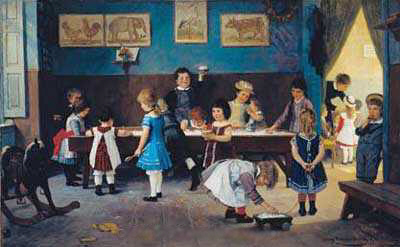
Kindergarten, where we learn the basics of how to treat one another
A famous saying hanging on the walls in many offices, especially those of caregivers, speaks of the lessons that teach us to care for one another and do the right thing in terms of concern for others as the type we learn in kindergarten, but these are sublimated or dismissed by those who live with socially and politically self-centered attitudes and behaviors. Here is how forgetting those lessons can also lead to mental health problems.

In order to forget those things that seem to be almost common sense and simple enough for a kindergartner can create confusion and anger over time.  Having to offer one set of beliefs that counter the basic social beliefs one learns early in life creates the kind of stress that over time might lead to depression. Also forgetting those basics can, and has, lead to wars and to social and political problems throughout man's history

What is that favorite saying that offers us those kindergartner basics?
“These are the things I learned (in Kindergarten):

1. Share everything.
2. Play fair.
3. Don't hit people.
4. Put thngs back where you found them.
5. CLEAN UP YOUR OWN MESS.
6. Don't take things that aren't yours.
7. Say you're SORRY when you HURT somebody.
8. Wash your hands before you eat.
9. Flush.
10. Warm cookies and cold milk are good for you.
11. Live a balanced life - learn some and drink some and draw some and paint some and sing and dance and play and work everyday some.
12. Take a nap every afternoon.
13. When you go out into the world, watch out for traffic, hold hands, and stick together.
14. Be aware of wonder. Remember the little seed in the Stryrofoam cup: The roots go down and the plant goes up and nobody really knows how or why, but we are all like that.
15. Goldfish and hamster and white mice and even the little seed in the Styrofoam cup - they all die. So do we.
16. And then remember the Dick-and-Jane books and the first workd you learned - the biggest word of all - LOOK.”
― Robert FulghumAll I Really Need to Know I Learned in Kindergarten
Those who practice the trickle down notions or who believe in Ayn Rand's theory of each man or woman just taking care of himself or herself make compromises, especially when they know that the great amounts of money they hold don't trickle down to the needy.  Winning at any cost is no way to play fair.  Taking ideas and products from others is a too common activity, whether it is a piece of music or an idea for a business.  People create problems for themselves and others, then excuse them with "Mistakes were made," which offers no admission of guilt for doing something wrong and dismisses the idea of being sorry. These behaviors done by people who wield power over others can create widespread social problems.  They also create problems for the individual that can lead to poor mental and physical health.
Those personal health problems come from disregarding safety issues and not caring for the safety of others, by not taking time to meditate and enjoy the beauty of creation, or to remember that life is to be lived in the moment.  Not remembering that we are all alike in very simple ways, that we all need the necessities of life to grow and that we all need one another can lead to the wide discrepancies between rich and poor and the disregard of victims of war and violence.
Psychologists tell us there are many causes of depression.  But one of these has to do with conflict.  The conflict can be with others, causing anger, frustration, anxiety that result in depression.  Or it can be internal conflicts that come from having one set of standards in conflict with other standards.  To relieve the anxiety that comes from behaviors outside of what are those basics, both children and adults will act out.  They will display anger or turn that anger inside into depression.  The stress from internal conflicts is a major cause of depression.
Those lessons learned in kindergarten offer the basics that work for children and for adults.  Robert Fulghum, the author of the poem that offers these lessons summarizes the lessons for life as this:
“Think what a better world it would be if we all-the whole world-had cookies and milk about three o'clock every afternoon and then lay down with our blankies for a nap. Or if all governments had as a basic policy to always put things back where they found them and to clean up their own mess.
And it is still true, no matter how old you are-when you go out into the world, it is best to hold hands and stick together.” 


Thursday, September 4, 2014

Dark horse of death must be dealt with better for seniors

Dark horse coming describes musically death, not dealt with sufficiently for seniors
Carol Forsloff - Recently there has been a surge of
news articles related to depression in the elderly.  One of those major
causes for depression is the loss of loved ones for which experts say are solutions.


Looking at the past as opposed to the future, those who lose loved ones suffer from the depression that comes when someone who has been an integral part of one's life moves on through death.

Depression is a major factor in health problems, either through physical illnesses creating emotional problems or the impact of emotional problems affecting physical difficulties.  They are often mutually reinforcing.

Mental health experts for the National Alliance on Mental Illness, however, are now focusing not on just describing the problem but focusing on what to do.  The bulk of the effort now is in defining the supports the elderly need as opposed to restating the problem.


For years it was thought depression was simply part of the aging process, but science tells us now that seniors don't have to suffer.  They are candidates for psychotherapy,appropriate medication, and emotional support.
The senior needn't suffer any more than anyone else from depression, either through the loss of a loved one or the loss of health, without mental health supports being helpful.


What are those supports?  They include getting the elderly involved in activities of interest.  A family member, caseworker, or friend needs to spend time and discover what some of these activities might be because the first several encounters might not work.  That's because depression brings with it denial, refusal, entrenchment.

The second support that is critical is making sure the senior is eating regularly and well.  Those who are depressed often neglect healthy activities, which includes eating properly.  Lack of proper nutrition can also impact the condition of depression.  As doctors maintain the physical and emotional components of depression are mutually reinforcing.

Exercise is also important.  The frequent reminders about it are evidence of its value.  It is a protection, a shield against depression and can lift mood.

There are other critical needs of support that include involvement with friends, family or even the comfort of relative strangers.

The important fact in all this is seniors don't have to be depressed as a "natural part of aging."  That's because depression isn't natural with regard to aging unless it is tied with another factor.

Death may ride into one's life, as described by the singer, Tony Joe White.  It  need not take one through the darkness, when help is available as mental health research has observed it  is just as helpful for seniors as for the young.


Wednesday, February 5, 2014

Ways to enjoy the holidays and avoid being depressed

Valentine's Day tree
Thanksgiving Day has become an important one in the United States, with special dinners and other forms of celebration.  However, like the Christmas holidays, it can also bring depression, as can other holidays like Easter or Valentine's Day.   Some experts, however, remind us that whereas the holiday can be fun for many people, in many ways it can be a painful time for others, as it is a reminder to those without families that they are alone.

Sometimes the depression comes from believing that if an individual doesn't have a partner, he or she is somehow not as pretty, not as good as others or not as valuable a person in some way.  Much of this comes from issues surrounding self concept, which is why, if that's the source of the problem, then it becomes the foundation for therapeutic understanding and professional support, when that is available.  Being isolated from family at a holiday can be stressful.

The feelings of sadness that come with the holidays often develop from previous experiences and relationships.  The holidays can trigger memories, of good and bad times, of having people around or conversely having been alone on those special occasions and not knowing what to do.  For those people for whom the problem is not endogenous, i.e. a constitutional part of oneself, as depression can be, then there are ways to alleviate the negative feelings.  Much of that can be done pro-actively and also with attitude change.  It is the kind of advice mental health experts offer that can be helpful for many events and issues that might bring negative thoughts or feelings.

One way to change one's attitude is to avoid being bitter, jealous of others who are in a relationship.  Adjust the mindset.  Be happy for the joy in the lives of others.  Express it.  Congratulate friends and family who are enjoying one another.  People are attracted to folks who are upbeat in their own lives and who care for others.  That poem by Ella Wheeler Wilcox that maintained the world will laugh when you do but will leave when you weep and will walk away has an element of truth in human behavior.

Go out.  Don't sit at home and mutter.  Instead mingle.  Don't go to those places where families tend to be in abundance.  Often there are those individuals who are also alone, or couples who go out on a holiday as a routine occasion, so the milieu should be comforting, pleasant and not overpowering with the numbers of people.  A holiday is also a time to visit a forum, attend a religious gathering or a media event.  It is also a time to help others for some organization or pick up some delicacy at that deli down the street where people of all sorts mingle.  Start a conversation on something different than the holiday.  Find something good about others and express it.

And finally think of yourself as whole, someone who has integrity within the self, who enjoys one's talents and qualities.  That aura of self-acceptance is attractive to others.

Finally, any day can be special if it is treated that way and the attitude to go with it is positive and upbeat.  A holiday is a day like others for doing good, being happy, offering positive movement in one's own life and taking charge of that.  It is often enough to get through those down times and often not only changes perspective but brings if not romance more friends into one's life.


Tuesday, August 6, 2013

Workplace seen as potentially risky for development of depression

[caption id="attachment_18422" align="alignleft" width="300"]Social workers have long hours and stress Social workers have long hours and stress[/caption]

Editor--What are the risk factors for depression?  According to recent scientific findings, what happens at work can lead to depression, and these are some of the risk factors at your job.

Americans are working longer at their jobs, and the long hours and high job demands are taking their toll on the mood of Americans at work.

As employers demand more, after cutting back on numbers of employees, the extra work falls on the remaining employees.  These employees feel the pressure and with many workers the stress becomes a trigger for depression.  Targeting the problem means reducing those risks , according to a report by Drs. Takahashi Amagasa and Takeo Nakayama of Kyoto University School of Public Health.

Researchers also found that the more workers remained in the long hour-overworked status, the worse the risk of depression.  Scientists tell us in the Journal of Occupational and Environmental Medicine,  "By targeting LHO, especially changes in LHO status, mental health measures that effectively reduce the occurrence of major depressive disorder will become possible by controlling factors in the occupational environment."

The Mayo Clinic provides a listing of additional risk factors, which combined with those at work can create major influences on the rate of depression in the population as well as individual risks.  That’s particularly true given the numbers of people with diabetes and hypertension that continue to grow in the normal population.  Some of these risk factors include:

  • Having biological relatives with depression


  • Being a woman

  • Having traumatic experiences as a child

  • Having family members or friends who have been depressed

  • Experiencing stressful life events, such as the death of a loved one

  • Having few friends or other personal relationships

  • Recently having given birth (postpartum depression)

  • Having been depressed previously

  • Having a serious illness, such as cancer, diabetes, heart disease, Alzheimer's or HIV/AIDS

  • Having certain personality traits, such as having low self-esteem and being overly dependent, self-critical or pessimistic

  • Abusing alcohol, nicotine or illicit drugs

  • Taking certain high blood pressure medications, sleeping pills or certain other medications (Talk to your doctor before stopping any medication you think could be affecting your mood.)


According to the National Institute of Mental Health depression is the most prevalent mental illness in the general population.