 |
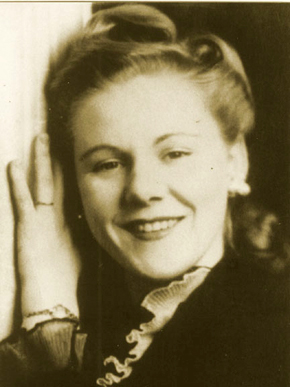
| Viola Liuzzo |
The legacies of both Liuzzo and George Romney, former Governor of Michigan and father of Mitt Romney, former Governor of Massachusetts, are a clear reminder how important it is for people to vote and for voting rights to be fair, just and inclusive.
The reminder is especially important as a Michigan Republican lawmaker, Pete Lund, has put forward a bill to partition voting in a way that would entirely change the Electoral College, an institution that has been long-held as part of maintaining the balance of power. At the same time, there have been renewed attempts to require additional documentation and evidence of the right to vote, in ways that make it particularly difficult for the poor and for minorities. Liuzzo gave her life in order to ensure the freedom to vote, and that life was memorialized by Governor Romney after her death in a way that underlined its value to everyone at the time. He was reported by the New York Times as stating after her death, “gave her life for what she believed in and what she believed in is the cause of humanity everywhere."
Liuzzo and a young African American man named Leroy Moton, who acted as her driver, shuttled civil rights workers to the airport in Montgomery. They were gunned down by members of the Ku Klux Klan following a civil rights march from Selma to Montgomery. The four men accused of the crime were Collie Wilkins, 21, Gary Rowe, 34, William Eaton, 41, and Eugene Thomas, 42.
Rowe was an FBI informant who presented testimony against the three others eventually tried for the crime of killing Liuzzo and Moton. The others said he pulled the trigger, but Rowe managed to gain advantage, according to documentation of the case, by giving evidence against the others.
Damaging stories were planted in the press that said Liuzzo was a Communist and that she had left her five children so she could be involved sexually with black men. It was later learned these stories in the press had come from the FBI, despite the fact they were false. J.Edgar Hoover, history has recorded after his death, was a man some say who had his own closet of secrets and maintained a harsh, conservative stance in order to prevent the microscope from being turned on his own life as a closeted homosexual.
An Alabama jury acquitted the three men of the murders of Luizzo and Moton. Afterward, however, Lyndon Johnson had officials from his administration charge these same men under an
1870 statute "of conspiring to deprive Viola Luizzo of her civil rights." The three men who had been acquitted in Alabama were found guilty under the federal law and sentenced to 10 years in prison.
The civil rights movement continued, as advances continued to be made. Viola Liuzzo has been said by those who have written her story, that she was ahead of her time in giving her life for the struggle of African Americans to gain their equal rights under the laws of the land. She was 41 years old when she died.
But like stories with false rumors, Luizzo's memory is mixed with the articles written about her as a tactic to prevent a guilty verdict for her killers. She remains sparsely known by students today, and her name is not prominent in the annals of history, as one of those who bravely fought for the rights of others and gave her life in that battle.
Liuzzo was a trained medical technician, a mother, a wife, and someone who was moved by Martin Luther King's cries for justice for African Americans. She volunteered to help in the march for civil rights after she had watched civil rights workers reviled and beaten when they crossed the Edmund Pettus Bridge into Selma in 1965, She left her husband, a Detroit Teamster Union official and her five children in order to help the movement during a period of several days in the South.
After Liuzzo was killed and her body returned home, her husband Anthony said this, "My wife died for a sacred battle, the rights of humanity. She had one concern and only one in mind. She took a quote from Abraham Lincoln that all men are created equal and that's the way she believed." Her death was memorialized by Governor George Romney, and he met with Anthony to reflect on Liuzzo's killing and her great contribution to voting rights, as they both looked through the numerous telegrams the Governor had received acknowledging it.
A St. Petersburg Times columnist recognized the contributions to the civil rights movement made by Viola Liuzzo in a selection written in 2002 about the sacrifices made by nine other white women during the period of time Luizzo was killed. In a book entitled Deep in Our Hearts columnist Bill Maxwell offers us his the narrative of white women heroines, representatives of thousands of them, who helped in the civil rights movement. The book, Maxwell wrote, presents the memoirs of Constance Curry, Joan C. Browning, Dorothy Dawson Burlage, Penny Patch, Theresa Del Pozzo, Sue Thrasher, Elaine DeLott Baker, Emmie Schrader Adams, Casey Hayden. Viola Liuzzo was among those heroines
These women, heralded by those who recognize Liuzzo's contributions in registering voters as well in sacrificing her life to ensure that African Americans could vote, are part of black history's story, one Maxwell says folks should not forget. He ended his column with this, as I end this article now, "These nine white women, along with thousands of others, made our country a better place. The movement did not end in these women's personal lives after they went home for the last time."
That would include Viola Liuzzo whose going home was surely her last. One might also hope that her going home will be remembered, as people resist any attempt to change the voting rights of ordinary citizens through gerrymandering, government shutdowns, threats and any other action that takes away the basic freedom that Liuzzo gave her life to protect.

