Showing posts with label schizophrenia. Show all posts

Monday, December 8, 2014

Mental health care disparities increasing between rich and poor

[caption id="attachment_10938" align="alignleft" width="500"]Many homeless are mentally ill Many homeless are mentally ill[/caption]
Carol Forsloff---A number of shooting incidents involving people who were, or are, mentally ill have again reminded people of the need to expand mental health evaluations and treatment; however, access to mental health care continues to lag far behind physical medicine.

And it is the poor who suffer the most, since 50% of psychiatrists refuse to take insurance, leaving many people with no alternative than to pay directly.  This is true despite the parity places on mental health care by the Affordable Care Act.  Many psychiatrists have opted out of taking insurance for mental illness.

The rich pay; the poor can't; and the problems related to mental health continue to grow, as frontline social service agencies continue to struggle with financial burdens following the recession.  In addition cuts in funding have created problems in having enough social workers available to meet the growing needs of the mentally ill.  More and more of these people end up on the streets or without services.  It is estimated that at least one-third of those living on the streets are mentally ill, and the numbers are growing, including those with severe illnesses such as schizophrenia.

A New Year's resolution to solve the problem of getting treatment for the mentally ill who can't afford private pay might be to increase funding for physician training with the recommendation that universities and hospitals promote psychiatry as a specialty, as fewer trained psychiatrists again reduces the possibility of people getting the mental health services they may need.  In addition, some psychiatrists may want to consider the importance of having a few more patients in the mix who have insurance and to treat these same people with the same level of care as the rich and famous.

Wednesday, December 3, 2014

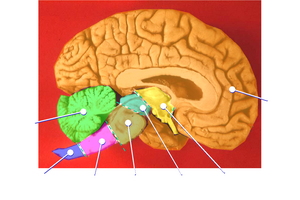
How the brain makes bad decisions

Human brain midsagittal cut color.png
Human brain
She couldn't keep a job because she couldn't get along with co-workers. Her choices in boyfriends brought special complications, including having a child by a fellow who turned out to be schizophrenic. Scientists tell us her disorder is caused by a brain dysfunction creating social perceptual problems that can seriously impact decision-making skills.

Scientists at Northeastern University have found that a section of the brain called the amygdala is the region that is involved in how adults interact socially. Lisa Feldman, distinguished Professor of Psychology, led the research to examine how our brain impacts social decisons.
What the research found was the size of Amygdala in the human brain correlates with our social networks in terms of size and complexity.

Barrett says this about the findings, "We know that primates who live in larger social groups have a larger amygdala, even when controlling for overall brain size and body size," said Barrett. "We considered a single primate species, humans, and found that the amygdala volume positively correlated with the size and complexity of social networks in adult humans."

The study examined 58 participants who completed questionnaires that involved the size and intricacies of their social networks. Then each individual had a magnetic resonance imaging brain scan to assess brain size. What researchers found was that link consistent with what scientists call the "social brain" hypothesis. This hypothesis states the human brain evolved to deal with the increasing complexities of modern life.

Individuals who have decision-making problems and difficulties in making effective social relationships fail at what some experts call the standards for social interaction. These are the unwritten rules of engagement that provide people with specific boundaries of behavior that involve how one sets benchmarks for what is appropriate and what is not. How an individual is able to meet or not meet these standards is often used as a diagnostic tool for assessing young people for special education. Social impairment is considered to be one of the criteria for determining a category of learning disability and how education is provided by schools.

These standards help personal growth and the building of relationships. When social perception is impaired, the individual can't interpret what is socially acceptable and what is not. They are therefore apt to make mistakes that others might not make. Just like the young woman described
in the beginning of this article, these individuals may have problems keeping a job or making the right choice in a mate.

Social impairments have been tied to the brain's function and the amygdala in studies as well as Alzheimer's disease. Scientists believe that by studying this region of the brain they will learn more about these diseases to provide intervention and therapeutic strategies for both children and adults.

Saturday, November 15, 2014

Hypnagogic hallucination: Scary but treatable sleep disorder

Watercolor by R. Cooper shows the types of images that can occur as hypnagogic hallucination
I felt my whole body had been filled with fluid, lying awake, motionless and terrified, from a medical event found more common than I ever had thought.

After that frightening episode, when I literally felt like screaming and could not, I went to the emergency room at the hospital for the diagnosis. The word, hypnagogic hallucination, was an unfamiliar term; but the explanation revealed its unusual, interesting and ordinary happening that few people know very much about.

Hynogogic hallucination is associated with sleep disorders, specifically narcolepsy. Not every person who has had an episode of that type, however, has narcolepsy, which is the tendency to fall asleep at any time and any place without the ability to control it. While these events are associated with seeing images and hearing voices during attempts to fall asleep, either at night or in the daytime, they can also occur in the process of waking up.

Experts tell us these episodes of hypnagogic hallucination can happen very rarely or frequently, depending upon the cause and condition of the individual. The following events or conditions such as stress, sleep deprivation, sensory deprivation, electrical or neurochemical changes in the brain, brain damage, or mental illness can be causal factors. While 75% of schizophrenics report having hypnagogic hallucinations, this does not mean that having an episode is a sign of mental illness. It is simply a condition that can arise from any one of a number of combination of factors.

For me another episode never occurred after that scary event of 20 years ago. The condition specifically was atonia, which is a loss of muscle activity during a period of wakefulness. The episode where I experienced hypnagogic hallucination happened during a period of extraordinary stress. Had the episodes been more frequent, there are medications and treatment available for the condition.

These medications and treatment include a medical evaluation at the outset. Then, depending upon the underlying condition, medications and/or therapies may be prescribed. These may be anticonvulsants, antidepressant medications, antipsychotic medictions, brain or ear treatments, or psychotherapy. For the most part, doctors maintain that hallucinations associated with waking and sleeping are less of a concern than those symptomatic of mental illness, but the fact they are frightening requires some initial intervention, if nothing other than reassurance of what the condition is and that it can be treated.

Psycho-social therapy can be helpful in teaching the patient the coping skills to deal with them, if hallucinations persist. Hallucinations due to sleep deprivation or severe stress generally stop after the cause is removed.

Wednesday, December 4, 2013

Blog talk radio host calls attention to mental health problems and barriers

[caption id="attachment_11074" align="alignleft" width="300"]schizophrenic schizophrenic[/caption]

Marsha Hunt---According to the National Institute of Mental Health, (NIH) "Mental disorders are common in the United States and internationally. An estimated 26.2 percent of Americans ages 18 and older (about one in four adults) suffer from a diagnosable mental disorder in a given year. Yet the stigma of mental illness remains a major barrier for folks to get help and be understood, and so some radio podcasts are changing that.

Mental disorders impact many people and are widespread, but the main burden of the illness is concentrated in about six percent of the population or one in 17 persons. Mental illness is the leading cause of disability in the United States and Canada, and many people have more than one mental illness at a time. Many receive no help and find many obstacles when they try to get attention to their illness. "Lack of access to treatment and resources, stigma against those with mental illness, and an uninformed society compounds the dearth of quality treatment professionals who offer affordable or sliding-scale payment options," a mental health professional states.

She was 38 when she was diagnosed with schizophrenia. She was working as an associate of Salvador Dali, the great artist, as a sculptor. Her future looked bright as an artist, and she had many friends among the very educated and those who favored the arts. Her parents were wealthy Chinese who did not know how to manage a daughter with the illness, but offered money for her care. She first lived in a series of apartments until her attempts at suicide so frightened her family that she was placed in a care facility in a rural area where she had ample room and opportunity to be outside and not just locked away in a ward somewhere and could be involved with others in crafts and special activities. But it took many years and much effort for her to reach the attention of those who could really help her.

Journalist, Suzanne Marcus Fletcher, Anchor and Host of The Body Politic Radio show, on Blog Talk Radio and iTunes has put together a series that shines a light on the range of mental health problems. These can be downloaded or heard regularly over the Internet. It is a way to call attention to the great need and challenge of mental health problems and a way to support those who are trying to help the mentally ill receive kind support and attention.

Thursday, November 21, 2013

Therapy critical for schizophrenic ex-convicts as a way of preventing violence

the writing of the schizophrenic

Leanne Jenkins--A man goes into a shopping mall with an assault rifle and large amounts of ammunition for loading and reloading. It's a common story of modern times to watch the events unfold, where the man ends up killing innocent people, then turning the gun on himself, and the description of the perpetrator includes confused thoughts and anger and the assumptions of mental illness. But does psychoses create violence and under what circumstances?

Recent medical research findings shows psychosis increases the risk of violent behavior among released prisoners and treatment reduces this risk. A group of released prisoners suffering schizophrenia was studied with the results showing that without treatment, psychotic individuals have a greater chance of violence. Follow up treatment, therefore, becomes important following prison for those who have schizophrenia.


The research is further evidence that those who have schizophrenia should have intervention and therapy, as it is a key to preventing violence. It also establishes the need for follow up of those who are schizophrenic who have been in prison and released, as too often violence can occur if ongoing therapy is not provided. Experts remind us of the need for better screening and treatment of prisoners as way of reducing recidivism and the possibilities of a former inmate becoming involved in a violent crime. This is particularly important because mentally ill ex-inmates lack treatment and medications, which increases the risk of violence in our society. 

Sunday, October 20, 2013

Schizophrenics need general health support as part of integrated care


[caption id="attachment_11074" align="alignleft" width="300"]schizophrenic schizophrenic[/caption]

Marsha Hunt---Often after a crime occurs involving someone who evidenced psychotic symptoms, it has been found those symptoms had appeared earlier, as new research tells us that unhealthy lifestyles in general are red flags for a psychiatric illness.

People who don't seem to care about themselves and have increased rates of needing health care and medications tend to have greater incidences of mental health conditions than others. Researchers are quick to underline, however, the fact that having physical problems does not in and of itself mean an individual is mentally ill. It is simply one of the indicators.

The research examined nearly ¼ million people in 52 countries and was supported by the World Health Survey. They found those who had experienced at least one psychotic symptom during the year of the study had more vision, hearing and teeth problems than those without any symptoms of psychoses.

Gregorio Maranon of Carmen Moreno Hospital in Madrid tells us that, “Patients with psychotic disorders and even with psychotic symptoms not fulfilling diagostic criteria for a psychotic disorder should be screened for additional medical problems.” Researchers also declare doctors should be trained in diagnosing patients with comorbid conditions.

This dovetails with an international report that underlines the importance of integrated care of the mentally ill. Experts say the road to recovery and function means to help alleviate painful symptoms, such as these comorbid conditions.

Wednesday, October 19, 2011

On schizophrenia in Pakistan

Ernest Dempsey — Some interesting news for all those who have serious interest in psychology, or broadly in mental health: political anarchy can cause schizophrenia. This claim, mind-boggling as it sounds, was made earlier this month, as reported in a news post on Express Tribune. Difficult to deal with, this revelation has not only put psychology research in Pakistan to question but also the seriousness of media in knowing what they are publishing. The claim in question was made in some workshop in Peshawar, the same city that has been in headlines for a major plagiarism issue this year, and it says political anarchy, terrorism, and social and economic disorders have resulted in an increased number of schizophrenia patients in the country. Very difficult to swallow indeed! Coming to the main claim later, it’s a pain to see words flung around without verifying their very existence. We know about ‘social circumstances’ and ‘economic crisis’, and of course ‘psychological disorders’ or ‘personality disorders’ etc; but social and/or economic disorders? A disorder is, in terms of health, a disease or problematic health condition. What possibly can ‘social and economic disorders’ mean? Maybe these terms will become meaningful in future unforeseen, but not as we know language today. Now to the cause of schizophrenia, well, before the appearance of this bombastic ‘finding’, political anarchy/terrorism and socio-economic were never scientifically related to schizophrenia in causal context. Schizophrenia is a neurobiological condition affecting the thinking faculty of patients, who gradually lose sensing reality as it appears to what are considered ‘normal’ people. Such conditions as schizophrenia fall in the category of ‘psychosis’. Depression commonly accompanies schizophrenia, but not always. And the two are different by nature as professor of psychiatry Elyn R. Saks notes in her book The Center Cannot Hold, “Depression, even psychotic depression, was primarily a disorder of feelings… schizophrenia was a thought disorder, a disorder that was psychotic at its core.” (p. 221.) With genes involved in causing schizophrenia, the disorder is one of neurobiological deterioration, frequently marked biochemically by overly active dopamine transmission/reception in the nervous system. Political anarchy or trauma (e.g. terrorism) may cause stress, in response to which existing mental health conditions may aggravate (symptoms get more frequent or pronounced); but these factors don’t cause schizophrenia. At worst, they can aggravate it. In her recent interview, published in Recovering the Self (Vol. 3, No 4), author Susie Dunham, who wrote the book Beyond Schizophrenia about her son’s battle with the disease, said, “There are professionals with many ‘letters’ following their names as credentials, who actually believe that a traumatic event triggers the disease! I happen to espouse the teachings of Dr. E. Fuller Torrey who wrote the book entitled Surviving Schizophrenia and has studied the disease for decades. Dr. Torrey suggests that traumatic incidents are simply concomitant in young people’s lives and have little or nothing to do with the disease’s onset.” Indeed, living in Pakistan, an average person isn’t traumatized by terror events to cause a serious psychological disorder, let alone a neurobiological one. Terrorism appears in news and is received like other bad news. A decade of violent frenzy has made terror news kind of routine, something you can watch on TV while having your supper. The exception will be those who personally suffer from or witness an act of terror. But even in that case, the resulting problem will likely be PTSD (post-traumatic stress disorder), as happens with some soldiers and security personnel who have been in the war zone. Then the fact the statistics given in the post in question are also of dubious authenticity, i.e. 1.4 million patients in Pakistan, reflects in the comment of a well-read psychology graduate Asadullah, “This simply isn’t an academic claim. In a country where we haven’t conducted a population census for over a decade, claiming that 1.4 million people are suffering from schizophrenia is akin to a deliberate attempt to sound ridiculous.” In a 2008 paper, researchers from Agha Khan University wrote: “The correct prevalence of schizophrenia in Pakistan cannot be known and thus the seriousness of the condition will always be masked.” How the mental health experts in the said workshop found out in just three years the prevalence of schizophrenia in Pakistan is a question this media post at least didn’t bother to answer. The problem thus also seems to be with media, even some well-reputed sources, which is far too lame when it comes to science and research. Not many in Pakistan would be able to catch the definition of schizophrenia, let alone its nature, causes, and risk factors, which are rarely described in media posts such as the one discussed here. Science, health, and research are treated in the same manner as political propaganda whereby anybody can say anything and everything regardless of any care of consequence. Someday perhaps, Pakistani media will take the pains to get writers and editors having actual knowledge of the essentials of science and health—including mental health.